If God has called you to be really like Jesus, He will draw you into a life of crucifixion and humility, and put upon you such demands of obedience, that you will not be able to follow other people, or measure yourself by other Christians, and in many ways He will seem to let other good people do things which He will not let you do.
Other Christians and ministers who seem very religious and useful, may push themselves, pull wires, and work schemes to carry out their plans, but you cannot do it; and if you attempt it, you will meet with such failure and rebuke from the Lord as to make you sorely penitent.
Others may boast of themselves, of their work, of their success, of their writings, but the Holy Spirit will not allow you to do any such thing, and if you begin it, He will lead you into some deep mortification that will make you despise yourself and all your good works.
Others may be allowed to succeed in making money, or may have a legacy left to them, but it is likely God will keep you poor, because He wants you to have something far better than gold, namely, a helpless dependence on Him, that He may have the privilege of supplying your needs day by day out of an unseen treasury.
The Lord may let others be honored and put forward, and keep you hidden in obscurity, because He wants you to produce some choice, fragrant fruit for His coming glory, which can only be produced in the shade. He may let others be great, but keep you small. He may let others do a work for Him and get the credit for it, but He will make you work and toil on without knowing how much you are doing; and then to make your work still more precious, He may let others get the credit for the work which you have done, and thus make your reward ten times greater then Jesus comes.
The Holy Spirit will put a strict watch over you, with a jealous love, and will rebuke you for little words and feelings, or for wasting your time, which other Christians never seem distressed over. So make up your mind that God is an infinite Sovereign, and has a right to do as He pleases with His own. He may not explain to you a thousand things which puzzle your reason in His dealings with you, but if you absolutely sell yourself to be His love slave, He will wrap you up in a jealous love, and bestow upon you many blessings which come only to those who are in the inner circle.
Settle it forever, then, that you are to deal directly with the Holy Spirit, and that He is to have the privilege of tying your tongue, or chaining your hand, or closing your eyes, in ways that He does not seem to use with others. Now when you are so possessed with the loving God that you are, in your secret heart, pleased and delighted over this peculiar, personal, private, jealous guardianship and management of the Holy Spirit over your life, you will have found the vestibule of Heaven.
G. D. Watson, in Living Words
G.D.Watson (1845-1924) was a Wesleyan Methodist minister and evangelist based in Los Angeles. His evangelistic campaigns took him to England, the West Indies, New Zealand, Australia, Japan and Korea. He also wrote several books.
NOTE: I have had this message in tract form for probably 50 years. In the tract, it was credited to “Author unknown.” In recent searches, I have seen attributions to both G. D. Watson and Leonard Ravenhill. Regardless, the message of the tract has both rattled and comforted my soul for all these years. I have learned to make it my personal pursuit to be content in Jesus’ pleasure in me.
“This day is a day of good news!”[verse 9] is what the four lepers said to one another upon discovering these large stashes of food left behind by the panic-stricken Syrian army – thus breaking the tragic famine that the people of Samaria had been suffering … but we’re getting way ahead of the story!
Here’s what had been happening to set up this spectacular, gracious provision that Yahweh had made for them…
For months, the Syrian army had been blockading and besieging Samaria. They had surrounded the city and prevented anyone from either coming into or going out of the city. Think of it as a severe ‘supply chain’ issue. The Syrians had totally cut off any supply chains of food from getting into Samaria.
It was so dire that they were eating even the last remaining of their service animals and beasts of burden.
ch 6.25 / a donkey’s head – the most undesirable part of an unclean animal – was selling for two pounds of silver…
and a pint of dove’s droppings [probably to be used for fuel for a little fire] was selling for two ounces of silver. [Two ounces of silver was what an average worker would earn with six months of labor.]
The inhabitants of Samaria had even been driven even to cannibalism – they were boiling and eating their own children / see ch 6.26-29
This drove King Jehoram to swear by God that he would kill Yahweh’s prophet Elisha before that day was done / ch 6.30-31
He sent assassins to take Elisha out / ch 6.32-33
But Yahweh had a message for Jehoram and the people of Samaria – and He gave it to Elisha to deliver to Jehoram and the starving populace of Samaria…
II /ch 7.1-2 / “DON’T DOUBT ME!” ~YAHWEH
v 1 / Elisha announced that Yahweh had a message for him to deliver – a message of relief from their famine and starvation. He quoted Yahweh twice so there would no mistaking who was speaking: “Hear the word of Yahweh: thus says Yahweh…” When God speaks, even through His prophet, we must believe Him and trust Him to do what He says He will do … even when we see no way He can do it!
God has no limits or restraints on what He is able to do … or the means by which He chooses to do it!
Do not doubt God! To doubt God’s Word or His power to fulfill His promises is to call God a liar / see 1 John 5.10
What Yahweh promised was “Tomorrow about this time a seah [about 7 quarts] of fine flour shall be sold for a shekel [2/5 of an ounce of silver – much reduced and more affordable prices than were being demanded during the famine / see 6.25], and two seahs [about 13-14 quarts] of barley for a shekel, at the gate of Samaria.” There was going to be food tomorrow – real food! And at affordable prices! No more donkeys’ heads! The food supply chain was going to be restored! And Yahweh was going to provide it! They didn’t know how … but they couldn’t wait!
The ‘gate’ was their gathering places for city council business and marketing – kind of like their ‘farmer’s market’ for the people.
v 2 / The poor starving people were ecstatic. But the ‘captain on whose hand the king leaned’ [chief of staff / right-hand man] was not just skeptical – he was openly and brazenly scoffing at such an ‘impossible’ prospect. He arrogantly disdained God, His Word, and His prophet.
And besides, he was not about to let Yahweh be seen as the One who would do this. He said to the man of God, “If Yahweh Himself should make windows in heaven, could this thing be?” Obviously, if there was a Yahweh, only He would be able to produce such a turn-around. But he wasn’t about to let this stand. This was not just doubt and unbelief at the word of Yahweh … He was mocking, insulting, ridiculing, blaspheming the very notion that even Yahweh could do such a thing!
Elisha doubled down: Not only will Yahweh do this as He had said, but this unbelieving, mocking Syrian captain – the king’s ‘right-hand man’ – will not be alive to enjoy any of it. “You shall see it with your own eyes, but you shall not eat of it.”Hold this in in your memory for when we get to the end of this story – we’re going to see if Yahweh shows him who is God!
Before we go any further, we have to ask ourselves: Why would Yahweh even be willing to be so gracious to this unbelieving city of Samaritans? Why is Yahweh doing this? Why is this story in the Bible? What is the narrator’s purpose for telling it?
Yahweh will graciously demonstrate again to unbelieving Israel that He alone is God
…And that He can – and is willing to – provide for them
…And He will again authenticate and validate His prophet who is faithfully delivering His Word to call Israel to repentance and to return to love and worship Him only as their true God
As He did with the unbelieving Israelites in the wilderness, He will demonstrate again that He is faithful to all His promises to be gracious to them and to provide for all their needs – if only they will believe and trust Him. But, as we shall see … they will not!
see Psalm 81.8-16 / “Hear, O my people, while I admonish you! O Israel, if you would but listen to me! 9 There shall be no strange god among you; you shall not bow down to a foreign god. 10 I AM the Lord your God, who brought you up out of the land of Egypt. Open your mouth wide, and I will fill it. 11 But my people did not listen to my voice; Israel would not submit to me. 12 So I gave them over to their stubborn hearts, to follow their own counsels. 13 Oh, that my people would listen to me, that Israel would walk in my ways! 14 I would soon subdue their enemies and turn my hand against their foes. 15 Those who hate the Lord would cringe toward Him, and their fate would last forever. 16 But He would feed you with the finest of the wheat, and with honey from the rock I would satisfy you.”
III / vv 3-8 / FOUR UNLIKELY ‘SAVIORS’
“But God chose what is foolish in the world to shame the wise; God chose what is weak in the world to shame the strong; God chose what is low and despised in the world, even things that are not, to bring to nothing things that are, so that no human being might boast in the Presence of God” / 1 Corinthians 1.27-29
v 3 / Look who Yahweh chose to be the messengers of this deliverance – four lepers … who were not only outcasts from their society, but they were shunned and excluded from any social contact or privileges. They were huddled outside the city gates – just waiting to die from starvation along with the rest of the people in the city.
They decided to do … something other than…Why are we sitting here until we die?
v 4 / They weighed their options – they had zero good options if they hoped to stave off their own dying from starvation:
if we sit here like we’re doing – we die
if we enter the city – the famine is there, and we die with everybody else
Hey! I’ve got an idea: let’s defect to the camp of the Syrian soldiers – if they kill us, then we die … but we’re going to die anyway
but maybe … they’ll spare our lives, and maybe even give us some food … and we live!
since we’re going to die anyway one way or the other, it’s worth the risk!
v 5 / So they arose at twilight to go to the camp of the Syrians… – but, lo and behold, there was no one there! The camp had been deserted…abandoned. Nothing but an eerie silence…and LOTS of food and stuff everywhere!
v 6 / What had just happened? Yahweh had intervened! He had messed with the minds and ears of the Syrian army. For Yahweh had made the army of the Syrians hear the sound of chariots and of horses, the sound of a great army, so that they said to one another, ‘Behold, the king of Israel has hired against us the kings of the Hittites [from their north] and the kings of Egypt [from their south] to come against us!’
Of course, King Jehoram had done no such thing … but Yahweh sent them this delusion to accomplish his purposes!
v 7 / So they fled away in the twilight and abandoned their tents, their horses, and their donkeys, leaving the camp as it was, and fled for their lives.
Notice that in the same ‘twilight,’ at the same time, simultaneously, the lepers were coming in ‘the front door’ and the panic-stricken Syrian army were running for their lives out ‘the back door’! And Yahweh was orchestrating both of these actions!
v 8 / These four starving lepers began gorging themselves with the food the Syrians left behind. And they started going from one tent to another, carrying stuff off to hide it so they come back later to retrieve it. It was like hitting the Powerball Mega-jackpot!
IV / vv 9-15 / “WE GOTTA SHARE THIS GOOD NEWS!”
v 9 / While they were celebrating and hoarding all their new-found bounty … suddenly their consciences smote them: “Wait a minute here … We are not doing right. This day is a day of good news. If we are silent and wait until the morning light, punishment will overtake us. Now therefore come; let us go and tell the king’s household.”
We should be so gracious and willing to share the Gospel [Good News] with all of those around us who are dying and perishing in their sins! / see Luke 2.8-20
v 10 / They did come back to the city. They told the gatekeepers what they had found.
v 11 / The gatekeepers immediately dispatched messengers to carry this good news to King Jehoram.
v 12 / King Jehoram didn’t believe it – he suspected that the Syrians were only playing hide-and-seek [or maybe hide-and-slaughter] by sneaking off to hide in the countryside to draw them out of Samaria and into the open plains so they could ambush and slaughter them.
vv 13-14 / King Jehoram’s counselors urged him to at least check it out: ‘Let us send and see’; so he agreed to send out some scouts to sneak around the perimeters to see if they were really gone… ‘Go and see’
v 15 / So the scouts sneaked out and circled around the Syrian campsite – and what to their wondering eyes should appear but behold, all the way was littered with garments and equipment that the Syrians had thrown away in their haste! It was true! The camp was empty and all the roadways and paths and fields were strewn with the stuff the Syrians had jettisoned in their haste to escape from what they thought were approaching armies hired against them by King Jehoram [the delusion Yahweh had sent them].
V / vv 16-20 / “TOLD YOU SO!”
v 16 / Then the people went out and plundered the camp of the Syrians. So a seah of fine flour was sold for a shekel, and two seahs of barley for a shekel, according to the word of the LORD / see v 1.
Notice how the narrator of this book repeats word for word what Yahweh had said would happen and when it would happen … and how it actually did happen as Yahweh had said: ‘according to the word of Yahweh’!
That’s why I titled the first section “DON’T DOUBT ME!” ~YAHWEH” and why I have titled this section “TOLD YOU SO!”
These verses 16-20 are a word-for-word repetition of:
Elisha’s prophecy from Yahweh that he delivered yesterday that not only would there be plenty of food by this time today, but also at what prices they would be sold / v 16
how King Jehoram’s ‘right-hand’ man had scoffed, mocked, disdained, and ridiculed how such a thing couldn’t possibly happen – not even Yahweh could ‘make windows in heaven’ and make this be / vv 18-19a
and how Elisha had pronounced the death sentence on the king’s ‘right-hand’ man for doubting and not believing what Yahweh had said He would do: And he had said, ‘You shall see it with your own eyes, but you shall not eat of it’ / v 19b
The key emphasis the narrator wants to make here is that according to the word of the LORD that He had said in every detail – SO IT HAPPENED!
v 17 / Now the king had appointed the captain on whose hand he leaned to have charge of the gate. During the time of the famine, his charge was to maintain order, crowd control, and put down any uprisings and riots that may have erupted among the starving townspeople.
Now that the supply chain has been restored and food is flowing in from the camp of the Syrian army, he is put in charge of the ‘gate’ to still maintain order.
Instead, he got trampled to death by the townspeople in the mad stampede to get food for themselves! And the people trampled him in the gate, so that he died, as the man of God had said when the king came down to him / v 17
When he had scoffed at the word of Yahweh, Elisha had said,‘You shall see it with your own eyes, but you shall not eat of it.’ And so it happened to him, for the people trampled him in the gate, and he died.
‘according to the word of Yahweh’
‘as the man of God had said’
‘and so it happened to him’
Again … Yahweh is demonstrating to Israel that He is most capable and willing to be their God, to be faithful to His every promise, to supply for their every need – even in the severest of their extremities and by the most unlikely of means. AND in His time, He will do that fully and perfectly by giving them and us Jesus Christ, “the True Bread from Heaven” / John 6.32.
“Do not work for the food that perishes, but for the food that endures to eternal life, which the Son of Man will give to you. For on Him God the Father has set His seal” / John 6.27.
“This is the work of God, that you believe in Him whom He has sent” / John 6.29.
“I AM the Living Bread that came down from Heaven. If anyone eats of this Bread, he will live forever. And the bread that I will give for the life of the world is my flesh” /John 6.51
Or do you presume on the riches of His kindness and forbearance and patience, not knowing that God’s kindness is meant to lead you to repentance? But because of your hard and impenitent heart you are storing up wrath for yourself on the day of wrath when God’s righteous judgment will be revealed / Romans 2.4-5.
Delivered at her Memorial / Celebration of Life service
I can only wish that I had known Betty during her more healthy and active years. But I didn’t.
Many of you did and have shared some of those testimonies since her going Home to Heaven. And you are looping them in your memories right now as I speak.
I would like to share with you what Nancy Farley wrote on her Facebook, 7/23/2022, the day after our Lord called Betty Home to Heaven:
Yesterday we lost a friend, Betty Lance. Betty had been my neighbor for several years, but I didn’t get to know her well until we started attending the same church.
I was in several Bible studies with Betty and also in a homemakers’ group where she became the one most-called-upon to pray.
Betty prayed the sweetest, most sincere prayers I’ve ever heard. I always felt God’s presence so strongly whenever she was speaking to Him. He was there in the midst of our group.
On one occasion I had invited a visitor to our meeting, a lady who never attended church. On our way home that lady remarked about Betty’s special prayer and how it had touched her heart.
Betty had mentioned in her prayer a verse of Scripture that says, “God owns the cattle on a thousand hills.” The lady wanted to see Betty again after that, so one day we went to visit her, took her out to lunch, and came back to see all of her beautiful artwork. It was her hobby, and Betty’s house was filled with her creations.
When we left, she gave both my friend and me a beautiful wooden angel that her husband, Ted, had carved in his wood shop. Betty’s small delicate hands had painted all of the intricacies on the creature’s tiny face. The love she had put into every stroke of paint penetrated my heart as she handed it to me. She smiled and thanked us for spending the afternoon with her. However, it was her I wanted to thank. It was she who had been a blessing to us.
I will always cherish that little piece of art, knowing the couple who created it and gifted me with something that can only partially reflect how special they are to me.
Betty truly was like an angel, so much that others could see and feel that she was different. There was no pretense with her; she was genuine.
Prayer….
“Lord, may others see YOU in us as we go about our lives. May we demonstrate the sweetness and kindness that Betty Lance demonstrated to us, especially on that day during her prayer. Yes, Lord, you do own the cattle on a thousand hills, and I thank you that my friend Betty is there with you now. She’s home at last, looking down with You perhaps on those cattle and all of creation, your creation…your handiwork, that someone like Betty will truly appreciate.
Amen.”
And then, others of you have told me so many of your stories about ‘the Betty I never knew…’ Like how groups of you all used to fellowship with other area churches and conduct joint Bible studies and social events – like the Fashion Shows. And when it came your turn to present, Betty would write the scripts for skits you all would act out … she would write your lines for you and even dress you all with outfits from her abundant wardrobe of clothes she had either made herself or acquired for such occasions. Your words were: “It was hilarious! Betty was vivacious, witty, funny, a cut-up, creative in every way.” Some of you even used the word ‘corker’ to describe her. You’ve told me, “And that was a ‘Betty’ that not everybody saw and knew.”
And, every one of you has similar memories and testimonies to the Grace of God that made Betty such a messenger of God’s own Grace. I’m sorry I missed knowing that ‘Betty’!
As it was for me, I have known Betty only for the past five years we have been here at Buck Run. But she has made a lasting impression on me during that time … that I will really fully appreciate only when I am re-united with her in Heaven.
Betty’s physical stature could have been sized, I suppose, as “Petite” with a capital “P.” But if there was a size for hearts, her gracious heart and gentle spirit would have been, like, “100 XXL.”
My lasting impression I will have of her until we are re-united in Heaven is one of what I call “the sweetness of grace.” In fact, I have often thought that if there could be a pictorial illustration of 1 Peter 3.3-4, it would be the picture of Betty Lance:
“Do not let your adorning be external – the braiding of the hair and the putting on of gold jewelry, or the clothing you wear – but let your adorning be the hidden person of the heart with the imperishable beauty of a gentle and quiet spirit, which in God’s sight is very precious.”
That’s the best way I know how to sum up Betty’s person, character, and testimony: ‘the imperishable beauty of a gentle and quiet spirit, which in God’s sight is very precious.’
I first met Betty in the late summer of 2017 shortly after we had come to our church. I was making some visits with Pastor York and Brandon Dodd, one of our interns at that time. Our first visit was with Ted and Betty. She was recovering from a recent injury [Ted thinks it may have been her broken ankle]. But on that first visit, I met this sweet, gracious, and quiet saint. She just smiled and spoke in quiet, gracious, and encouraging words … and she immediately won my heart.
A few months after that, I would assume teaching our Sunday School class, and Ted and Betty were members of our class. There was nothing showy, pretentious, or ostentatious about Betty. She would just sit beside Ted – probably fewer than ten feet in front of me – and smile sweetly at me as I taught the lesson. She often reminded me of what Mary may have looked like as she sat at Jesus’ feet and listened to His teaching. She was receiving the Word of Christ through me … with meekness and joy.
She lived out in her quiet ways the fruit of the Spirit in its fullness.
Betty was an encourager and a minister of the grace of Christ. She would send Debbie and me cards on every special occasion – or sometimes on no occasion … but just to tell us how much she loved us. She did the same – and more so – for many of you and numerous others who knew her longer than we have.
Only God knows how many more … but He does know!
The LORD took note and recorded every one of them:
Then those who feared the LORD spoke with one another. The LORD paid attention and heard them, and a book of remembrance was written before Him of those who feared the LORD and esteemed His Name. “They shall be mine, says the LORD of hosts, in the day when I make them my special treasure…” / Malachi 3.16-17
Betty was – and is – a special ‘jewel’ and treasure to Jesus … and to all of us.
During the last two times I visited her just a day before she died from here, I tried to take what few moments I had of her weak attention to engage her eyes, and I told her: “Betty, you really have no idea what an influence and witness you have been to so many just by living Jesus through your life. Jesus will tell you when you behold Him … and see Him face to face. But hundreds of people love you and are praying for you – just because you crossed their paths and came into their lives … just because they know you and came to know who Jesus is … through you.”
And so say we all!
Let’s pray:
Heavenly Father, we are here today not just to celebrate the life of one of your sweet saints whom we love dearly – but more … to celebrate your grace that made her so.
She was surely a treasured trophy and faithful witness of your Gospel and grace.
As Paul the apostle wrote to the churches in Galatia as he recounted his own testimony of saving, transforming grace … he said, “And they glorified God because of me.” We glorify you because of Betty.
Through Betty Anne, your love toward us was perfected, completed, and delivered.
And now we’re asking you that you will be pleased to continue to perfect and complete your love to Ted and all their family through us.
May you bless them and keep them, may you make your Face to shine upon them, and be gracious to them … May you lift up the light of your Countenance upon them, and give them peace.
Through the merits and righteousness of your Son and our Savior we pray,
Here is what has happened in Israel since our last lessons from the ministry of Elijah
Elijah has anointed Elisha to be his successor / 1 Kings 19.19-21
Elijah has been taken up to Heaven in a whirlwind and chariots of fire / 2 Kings 2.1-18
Elisha asked for and received a ‘double portion of your spirit’ that had rested on Elijah / 2 Kings 2.9-14
Elisha proceeds to perform a number of miracles – again to show to Israel that Yahweh was their God and to display His Glory / 2 Kings, chapters 2-4
That brings us to this lesson’s story – yet another miraculous healing/cleansing of the leprosy of Naaman, the Syrian commander…
II / JESUS’ INTERPRETATION AND COMMENTARY ON THE SIGNIFICANCE OF THIS STORY / LUKE 4.16-30
[We’re going to begin our lesson with Jesus’ interpretation and commentary on 2 Kings 5 that He delivered to His hometown folks on His return visit to Nazareth … recorded in Luke 4.16-30. The reason we’re doing this is because Jesus will give us insight into Yahweh’s purpose and motivation for healing/cleansing Naaman, who was a Gentile. Yahweh was giving us a pointing finger toward His ultimate purpose of reaching out to and saving Gentiles through the Gospel when Messiah comes. That is what Jesus was fulfilling and interpreting in Luke 4.
Think of it this way: you know how when we are starting a trip, we often use a GPS like Google Maps or Waze to take us there. When you enter your starting point and your destination, the GPS will also show you the route you’re going to follow on your trip. Well, 2 Kings 5 is kind of like our starting point [at least for this lesson] and Luke 4 is kind of like Yahweh’s destination being announced by Christ. 2 Kings 5 is pointing us to Luke 4. Or, to flesh it out even more, 2 Kings 5 is a beginning ‘leg’ of the journey that will find its fulfillment in Acts 13.46-48; 14.27; 15.13-17; and many more such references [both OT and NT]. See Lesson Notes below, II, #14.]
Before we even get into unfolding this story from 2 Kings 5, let’s fast-forward to how Jesus interpreted and commented on the significance of it – because Jesus is going to draw some distinct parallels between Israel of His day and how they treated Him … and the Israel of Elisha’s day and how they were treating Yahweh in their day.
AND – be sure you get this – Jesus will also reveal to us Yahweh’s purpose in ministering His healing power to Naaman through Elisha … and that is, to show His compassion to Gentiles and His purpose to save Gentiles as well as Israelites.
So, what is happening in Luke 4.16-30? Jesus had gone back to His hometown, Nazareth, where He had grown up.
When He stood up in the synagogue that Sabbath and read from Isaiah 61, He announced “Today this Scripture has been fulfilled in your hearing.” “I AM your Messiah!”
At first, everyone spoke well of Him and marveled at His gracious words. But that was because they just thought of Him as one of their peers: “And they said, ‘Is not this Joseph’s son?’’
But then Jesus unmasked the hypocrisy, superficiality, and unbelief of their hearts toward Him. And He said to them, “Doubtless you will quote to me this proverb, ‘Physician, heal yourself.’ What we have heard you did at Capernaum, do here in your hometown as well.” What Jesus was unmasking in their heart was that they were not believing in Him and receiving Him as their Savior. They were not accepting Him as the Son of God. To them, he was just their famous ‘homeboy.’
The key is found, I think, in that Jesus specifically pinpointed their accusation against Him: “What we have heard you did at Capernaum, do here in your hometown as well” / Luke 4.23. So what specifically did He do at Capernaum that they were taking such offense at?
Keep in mind that just a short time before this Luke 4 return visit to Nazareth, His boyhood hometown, He had moved from Nazareth to Capernaum [see Matthew 4.12-16]. He performed many miracles in Capernaum and the surrounding regions. One such notable miracle was the healing of the son of a Gentile royal official [see John 4.46-54].
Whether this specific act was in the minds of his hometown people, we don’t know. What we can be sure of is that His former hometown neighbors were expecting Him to bestow on them the same kinds of preferential treatment and special favors that He had performed at Capernaum.
So we can identify the sinful attitudes they had toward Him under at least these three categories:
pride / privilege / entitlement: in their merely human relationships with Him based on religious tradition, ethnic and provincial kinship
maybe even resentment: that He had performed acts of mercy and healing at Capernaum – and they were expecting special favors for themselves [like, ‘we owned You first! … or something like that]. Or maybe even resentment because they had heard He had ministered to Samaritans and even a Roman official – surely they would take priority preference over them! Was there maybe even some prejudicial bigotry in their hearts here?
unbelief toward His claim to be The Christ: Matthew and Mark both highlight that “…He could do no mighty work there … because of their unbelief … And He marveled because of their unbelief!” / see Matthew 13.58 & Mark 6.5-6
When the hometown folks at Nazareth were offended at His claims to Deity and Messiahship, they violently attacked Him and even tried to push Him over a cliff to His death / Luke 4.28-30.
Jesus scolded them for their unbelief and proclaimed to them that since they would not believe on Him, then He would go and save those who would – even among the Gentiles.
IT WAS THEN that He reminded them how Yahweh had bypassed the unbelieving Israelites during the ministries of Elijah and Elisha AND MINISTERED HIS SAVING GRACE TO GENTILES:
And He said, “Truly, I say to you, no prophet is acceptable in his hometown. 25 But in truth, I tell you, there were many widows in Israel in the days of Elijah, when the heavens were shut up three years and six months, and a great famine came over all the land, 26 and Elijah was sent to none of them but only to Zarephath, in the land of Sidon, to a woman who was a widow. 27 And there were many lepers in Israel in the time of the prophet Elisha, and none of them was cleansed, but only Naaman the Syrian.” / Luke 4.24-27
So … in those two Old Testament illustrations, Yahweh was demonstrating His passing over unbelieving Israelites to show compassion for Gentiles … and His ultimate Gospel purpose to call His people from among the Gentile nations! / see Acts 13.46-48; 14.27; 15.13-17; many others
That is what Yahweh is doing here prophetically in 2 Kings 5 by providentially extending His healing mercy and saving grace to this Gentile, Naaman the Syrian!
III / vv 1-4 / NAAMAN’S LEPROSY … AND HOW YAHWEH PROVIDENTIALLY ARRANGES TO CURE & CLEANSE HIM
vv 1-2 / Naaman was a high-ranking military commander of the king of Syria’s army – but he had a major defect!
commander of the army of the king of Syria: supreme commander, Syrian army’s highest-ranking officer
a great man with his master: high social standing, respect, and prominence
in high favor: highly regarded by his king because of his military victories and conquests
because by him Yahweh had given victory to Syria: THIS statement tells us that Yahweh is the Lord and King over all the nations, their armies, and the courses they all take – and Yahweh is going to use the armies of Syria to win military victories even over Israel AND use those victories to bring His message of grace to this Gentile general… YAHWEH is exercising His sovereignty and providentially arranging for Naaman to meet His prophet Elisha, come to know Him, and receive His mercy and grace!
a mighty man of valor: a man of great wealth and a courageous warrior
BUT he was a leper: meaning he had a serious, disfiguring skin disease which according to Levitical law rendered him ceremonially ‘unclean’ … and under the same Levitical law would have excluded him from society / see Leviticus 13 & 14
v 2 / During one of Naaman’s guerilla strikes into Israel, he had taken hostage one of their young girls, and she had been brought back to his house to be their maidservant to Naaman’s wife.
v 3 / You would have thought that this young girl would harbor hatred and resentment toward her captor and master – but, No! She had only compassion for him and his disease … much like Yahweh’s mercy and compassion He had for the lost among the Gentile nations that were attacking Israel. She only wishes that her master knew about Yahweh’s prophet Elisha … Would that my lord were with the prophet who is in Samaria!He would cure him of his leprosy.
v 4 / Naaman trusts the heart of this young Israelite girl. She must have demonstrated and proven herself to be a young girl of character, sincerity, and believability.
IV / vv 5-7 / THE KING OF SYRIA MAKES AN OVERTURE AND APPEAL TO THE KING OF ISRAEL
vv 5 / The king of Syria writes a letter of request to the king of Israel to fulfill this request for his beloved general’s cure … and accompanies his letter of request with a gift and peace-offering of 750 pounds of silver and 150 pounds of gold [a sizeable and rich monetary gift] and ten outfits of fine clothing.
v 6 / The king of Israel was Jehoram [see ch 1.17]. But more importantly, this Jehoram was the son of Ahab and Jezebel [ch 3.1] – which means that…
this Jehoram would have witnessed the ministry of Elijah during his father’s reign
and he was carrying on his wicked father’s and evil mother’s abominations in Israel.
The king of Syria is just assuming that the king of Israel would have a working relationship with and be a channel to the prophet Elisha.
But, Jehoram knew nothing of Yahweh [by personal faith] and couldn’t have cared less … except to save his own skin!
v 7 / Am I God, to kill and to make alive, that this man sends word to me to cure a man of his leprosy? However, Jehoram did know that only God [Yahweh] had the necessary power to cure this Syrian general’s leprosy. The curing of Naaman’s leprosy was comparable to the power of resurrecting the dead – something that Elisha had performed in raising the Shunammite’s son [ch 4.18-37]. Surely Jehoram had heard of that!
This demand threw Jehoram into a panic and rage. He tore his clothes which was a demonstration of utter frustration and consternation, mourning and grief. He could only conclude that the king of Syria was placing this impossible demand on him in order to pick a fight with him and start a war!
V / vv 8-10 / ELISHA INTERVENES TO DELIVER YAHWEH’S GRACE, HEALING, AND CLEANSING
v 8 / When Elisha sends word to King Jehoram, it is not just to bail him out of his distress … but Yahweh’s intention is to show Jehoram and Israel that He alone is God, and that Elisha is His prophet. And Yahweh is also going to show unbelieving Israel that He will receive glory – even by showing mercy to a Gentile!
v 9 / When Naaman responds to Elisha’s invitation to come to him, he assumes that Elisha will personally honor him because of his personal standing, importance, and prominence … and come himself to meet him – and maybe even perform a miraculous show of healing on the spot [see v 11].
v 10 / But instead, Elisha sends one of his own messengers out to Naaman with simple instructions from Yahweh: Go and wash in the Jordan seven times, and your flesh shall be restored, and you shall be clean.
NOTE: Naaman would also receive a lesson about how Yahweh treated leprosy in Israel – it was a symbol of our moral and spiritual ‘uncleanness’ before God; in other words, a type for our sin that requires ‘cleansing’ by being ‘washed.’ In Levitical law, the ‘cleansing’ of leprosy was also accompanied by sacrifices that pointed to the ‘washing’ by regeneration and by the blood of Christ.
ALSO this action would require Naaman to exercise humble faith in Israel’s God, Yahweh, And the seven times would require him to believe and find out that the healing/cleansing was a miraculous act from Yahweh.
VI / vv 11-13 / “HELP MY UNBELIEF”
v 11 / Now it is Naaman’s turn to fly into a rage…and he actually starts to leave and go back home without receiving the cure he had come to receive. “You’ve got to be kidding me! Is this any way to treat a man of my caliber and standing?” This is not what he expected. He was sure that Elisha would honor him by making a big fuss over him – and he would be the star of this performance. But when God extends mercy to us – only He will be glorified, recognized, and receive the credit!
v 12 / And, Naaman is right – the rivers in his native Damascus were more beautiful and would have served better than this muddy rivulet Jordan if his cure was to be found just in the physical element of the water.But the cure and cleansing was not in the physical ‘washing’ in physical river water, but in the word and power of Yahweh that would make the cleansing effective. Naaman would have to trust in Yahweh’s message of grace delivered through His prophet.
v 13 / Naaman’s own servants now approach him to reason with him … notice how they address him as “My father…” which shows the warm, mutual relationship of affection between them, more than just mere servile subservience … “My father, it is a great word the prophet has spoken to you; will you not do it? Has he actually said to you, ‘Wash, and be clean?’”
“Isn’t this what you have come all the way here for? Isn’t he telling you how to be clean?”
Also, the word for “‘great’ word” is the same word for “‘great man with his master’ that was applied to Naaman in verse 1 – as if to say, “This word from Yahweh through His prophet is a fitting word for you and your need … it is what you wanted and asked for, isn’t it?”
VII / vv 14 / “ACCORDING TO YOUR FAITH BE IT DONE TO YOU”
Naaman humbled himself and did what Yahweh’s prophet had told him to do: So he went down and dipped himself seven times in the Jordan, according to the word of the man of God…
We do have to admire this demonstration of humility and faith in the word of Yahweh, Elisha’s God, by this great Syrian general: to make the additional journey of 25 miles to the Jordan River … go down into the muddy water in the presence of all his servants and attendants … dunk himself under the water one time, two times, three times, four times [and after each dunking inspect himself to see if there was any change], five times, six times, and then the seventh time!
…and when he obeyed the word of Yahweh through His prophet, …and his flesh was restored like the flesh of a little child, and he was clean!
NOTE: it was a ‘little’ Israelite girl who had first told him about Yahweh’s prophet … and when he trusted and obeyed, his flesh was restored like the flesh of a ‘little’ child [same word]. Didn’t Jesus tell us that we must humble ourselves and trust Him like ‘little’ children to receive His mercies and be ‘great’ in His sight [Matthew 18.1-4]?
“The Hebrew is na‘ar quaton, and there is evidently a play on the phrase na‘arah qetannah [“little girl”] in v. 2. The “great man” [v. 1] had a problem, to which the “little girl” had the solution; but the solution involved Naaman’s becoming, like her, “a little child” – someone under prophetic authority, humbly acknowledging his new faith.” [ESV Study Bible]
But Yahweh is the One who receives all the glory, praise, honor, and yes – even the new-found worship of this former worshiper of idols! / see vv 15-18
“He had looked to the prophet himself for a cure, in line with the words of his Israelite informant [v. 3]; but the way in which the cure has been wrought has made it clear to him the Elisha’s God [Yahweh] is a living Person, not simply a convenient metaphor for unnatural [supernatural] prophetic powers.” [ESV Study Bible]
“TAKE HEART … YOUR FAITH HAS MADE YOU WELL!” [Matthew 9.22]
Sunday School Lesson Notes/Talking Points | Lesson 1
Read 1 Kings 3.1-15
I / INTRODUCTION TO 1 KINGS
We will begin a survey and study of 1 & 2 Kings. First, a brief introduction to these historical books…
What will we discover in these histories?
The books of Joshua, Judges, 1&2 Samuel, and 1&2 Kings contains the whole story – from beginning to end – of the people of Israel in the Promised Land God has given them after He had delivered them from bondage in Egypt.
If you read 1&2 Kings – along with 1&2 Samuel – you will find the records the histories of the kings of Israel from their first King, Saul, to the end of the kingdom, the dynasty, and the monarchy.
In fact, these books, taken together, will take us to the end of the national independence of Israel as a nation. 2 Kings will end with a description of the fall and destruction of Jerusalem, their capitol, and the nation’s being carried off into captivity to Babylon.
[2 Kings 17 will also record the previous fall of the northern kingdom of Israel {as distinguished from the southern kingdom of Judah} when they were invaded and carried off into captivity to Assyria.]
[We also need to remind ourselves about the split or division of these two kingdoms recorded in 1 Kings 11.26-ch 12. This divided kingdom (secession) occurred after Solomon’s death early during the reign of Solomon’s son, Rehoboam. From the time of that split, the northern tribes and kingdom are called ‘Israel,’ and the southern tribes and kingdom are called ‘Judah.’]
However, these records are not just royal or national chronicles [they recorded and kept meticulous records of their national affairs – especially their royal reigns.
They are specifically Yahweh’s holy critiques and evaluations of their relationships with Him.
Here is an excellent Purpose Statement for these books from Yahweh’s holy perspective: “The books of Kings continue the story of kingship begun in Samuel, and their primary purpose is to record the ‘covenant failure’ of the Hebrew united and divided monarchies. The Biblical narrative implicitly balances the notion of God’s sovereignty and the reality of human freedom and declares that God was justified in exiling His people for the failure of the kings of Israel and Judah to uphold the ideals of the Davidic covenant.” [A Survey of the Old Testament / Andrew E. Hill & Jonathan H. Walton]. This theme also serves to show us the ultimate failure of all human kings and our need for King Jesus to come with His Gospel and salvation!
You will find Yahweh’s specific commands and His certain consequences for their disobedience to Him and violating His covenant He made with them in 2 Samuel 7.
David solemnly charged Solomon to keep these covenant conditions in 1 Kings 2.1-4.
Here in 1 Kings…
David had reigned as king over the united kingdom for about 40 years, as recorded in 2 Samuel.
But now his death is imminent. 1 Kings 1.1 begins the book with that announcement.
There was a brief power struggle from one of David’s other sons. Adonijah attempted to pre-empt any other succession and enthrone himself / 1 Kings 1.5-27.
This prompted David to publicly announce that Solomon would be his successor / 1 Kings 1.26-53.
David gave Solomon some stern and specific instructions concerning how he should administer the kingdom’s affairs / 1 Kings 2.1-9.
David dies / 1 Kings 2.10-12.
Solomon begins well, showing wisdom already in how the kingdom should be ruled in justice / 1 Kings 2.13-46.
Chapter 2 ends with the words: So the kingdom was established in the hand of Solomon.
II / SOLOMON BEGINS HIS REIGN / WARNING SIGNS ALREADY! / 1 Kings 3.1-3
Solomon made a marriage alliance with Pharaoh king of Egypt…
Although this was a common practice among kings and nations in that day, Yahweh had specifically prohibited His people and nation from making any kind of alliance with ‘foreign’ nations, and especially Egypt! / Deuteronomy 17.14-17.
ALSO…this same Hebrew word for ‘made a marriage alliance’ is translated ‘intermarry’ in Deuteronomy 7.3. Yahweh prohibited intermarriage with other nations because He knew that this would lead their hearts and allegiance away from following Him ‘to serve other gods,’ which is precisely where it led Solomon’s heart / 1 Kings 11.3-4.
God knows our hearts and He knows what He’s talking about when he makes such warnings and prohibitions!
Solomon also sacrificed and made offerings at the high places…
Yes, Solomon did love the LORD [v 3], but already his love for Yahweh was divided and distracted by his other loves and desires. Yahweh’s unconditional and non-negotiable First and Greatest Commandment has always been to ‘love Yahweh your God with ALL your heart…’ / Deuteronomy 6.4-5
These ‘high places’ had been left over from the previous inhabitants of the land. They were the prominent places of worship to their idols and false gods. What Israel had done was to ‘re-dedicate’ them to the worship of Yahweh. But, again, this was a violation and disobedience to Yahweh’s command to establish only one place of worship that He would choose for them / Deuteronomy 12
III / SOLOMON GOES TO GIBEON TO WORSHIP YAHWEH / v 4
This appears to be an expression of his gratitude to Yahweh for establishing him as king over Israel and to commit himself to follow and serve Yahweh in all his ways – to seek the blessing of Yahweh on his reign and on the people of Israel.
He made a most generous expression of worship to Yahweh by offering a thousand burnt offerings on the brazen altar that was still being housed in Gibeon.
IV / YAHWEH IS PLEASED WITH SOLOMON’S WORSHIP – AND OFFERS TO GIVE HIM WHAT HE MOST WANTED – SOLOMON ASKS FOR WISDOM / vv 5-9
v 5 / At Gibeon, as Solomon was worshiping Yahweh, He appeared to Solomon in a dream and offers: “Ask what I shall give you?”
Stop for a moment, and ask yourself: “How would I answer that same question from God?” The fact of the matter is, we want all kinds of things and ask for things in our prayers all the time! What we ask for reveals and expresses what we most want. So, if you could have anything you most want, what would that be? This is a heart-searching question and examination we all would do well to conduct and answer.
Here’s what we will find out about Solomon’s request: it was perfectly synced with and aligned with God’s pleasure, God’s desires, and for God’s glory! His mind was thinking in sync with Yahweh’s mind and his own heart was beating in rhythm with Yahweh’s heart. So should ours!
v 6-7a / Solomon begins by extolling the love of Yahweh, His faithfulness to His promises to his father David. This entire expression is a confession that Yahweh had faithfully fulfilled every promise that He had made to David in 2 Samuel 7.
Solomon is where he is that day because Yahweh had made and kept His promise to David that “When your days are fulfilled and you lie down with your fathers, I will raise up your offspring after you, who shall come from your body, and I will establish his kingdom.” 2 Samuel 7.12
v 7b / Solomon humbly and freely confesses his inadequacy to be the king he wants to be and knows he ought to be to represent Yahweh well and serve Yahweh’s people in ways that benefit them best.
He calls himself “although I am but a little child.”
I remember so well when I was called to my first pastorate in 1973. I was only 22 years old. This same conviction and prayer gripped me. I prayed this same prayer to the Lord who was calling me to lead and serve His people. It has never left me even after all these years. After all the experience I may have acquired from all the decades of serving God as faithfully as I have known how, I still feel the same inadequacy and incompetence apart from the wisdom that God must give me each and every day – in each and every circumstance in which I am called to conduct my ministry among God’s people.
v 8 / “your servant” [vv 6, 7, 8, 9] Solomon uses this word over and over to refer both to his father David and also to himself. He has no illusions of his own worthiness, innate abilities, or qualifications to perform this ministry Yahweh has called him and given him to do.
And neither should any one of us. Regardless of what position we may have, or what service Jesus gives us to perform … regardless of how well-known and prominent or how obscure, unseen, and unrecognized by others we may be – we are nothing more than ‘servants…as the Lord assigned to each’ / 1 Corinthians 3.5
v 9 / “Give your servant therefore an understanding mind to govern your people, that I may discern between good and evil…” SO…THIS is what Solomon wants more than anything else and what he asks Yahweh to give him.
“an understanding mind” is a mind that is committed to God’s will, what God wants, in sync with God’s own mind as revealed in Jesus Christ and the Scriptures. It is a mind that is committed to knowing God and schooled by being saturated with God’s Word, and trained by the consistent practice of unquestioning obedience. It is a mind that has rejected any arrogance in its own wisdom, and instead humbly submits to God’s will. / Proverbs 3.5-8
We are commanded to pray for this same kind of wisdom in our own personal contexts and experiences. James 1.5: If any of you lacks wisdom, let him ask God, who gives generously to all without reproach, and it will be given him.
We will use this wisdom that God gives us in order to conduct all our relationships with others in ways that represent Him well and in ways that He Himself is doing. Listen to how James contrasts our own self-willed wisdom with the wisdom that comes from God: Who is wise and understanding among you? By his good conduct let him show his works in the meekness of wisdom. 14 But if you have bitter jealousy and selfish ambition in your hearts, do not boast and be false to the truth. 15 This is not the wisdom that comes down from above, but is earthly, unspiritual, demonic. 16 For where jealousy and selfish ambition exist, there will be disorder and every vile practice. 17 But the wisdom from above is first pure, then peaceable, gentle, open to reason, full of mercy and good fruits, impartial and sincere. 18 And a harvest of righteousness is sown in peace by those who make peace. / James 3.13-18
V / YAHWEH IS PLEASED AGAIN & YET MORE – AND PROMISES TO GIVE SOLOMON WISDOM … AND SO MUCH MORE BESIDES! / vv 10-13
“It pleased the Lord that Solomon had asked this…” Do you know the surest way to know that what you ask for when you pray will please Him? The answer really is simple: just ask Him for what you already know He wants you to have? And how do we know what He wants us to have? Again, the answer is simple: Delight yourself in Him! Love Him with all your heart. Find all your joy, satisfaction, and contentment in Him. Make Him all the life-portion and possession you want. Fill your mind, heart, and will with His Word. Psalm 37.4: Delight yourself in the LORD, and He will give you the desires of your heart. Because when you delight yourself in Him, what you want and all you want is Him! And He promises to give you all of Himself that you want!
In fact, that is precisely what God has done by giving us Christ! Jesus Christ is, in Himself, the very fulness of the very God, “and you have been filled in Him…” / Colossians 2.9-10.
And when God gives us Christ, He gives us ALL things! Romans 8.32: He who did not spare His own Son but gave Him up for us all, how will He not also with Him graciously give us all things?
Ephesians 1.3: Blessed be the God and Father of our Lord Jesus Christ, who has blessed us in Christ with every spiritual blessing in the heavenly places…
SO … Yahweh promises Solomon that He will give him, not only what he asked for, a wise and discerning mind, but He will also give him many other blessings he didn’t ask for: both riches and honor.
And if Solomon will just obey Yahweh as He has commanded, Yahweh will fulfill and perpetuate the covenant promises He had made to David – give Solomon a long life.
I have always told the people I was teaching and leading over the years: “You can be just as wise as Solomon was!” Of course, I’ve always been met with a great deal of skepticism from the humble folks I have associated with. “How can that be? Nobody was as wise as Solomon? Solomon was in a wisdom class all to himself. He was not only the valedictorian of his wisdom class – he was the ONLY-torian of his class! Didn’t even God say, ‘Behold, I give you a wise and discerning mind, so that none like you has been before you and none like you shall arise after you’?”
And, of course, the answer to all of that is: “Yes!” But, at the same time, Yahweh gave Solomon the wisdom He asked for because Solomon would need that wisdom to do what God had given him to do. And God makes you the same promise! You don’t need the wisdom God gave Solomon because God doesn’t give you the same life assignment He gave Solomon. But God makes the same promise to you for what He has given you to do: If any of you lacks wisdom, let him ask God, who gives generously to all without reproach, and it will be given him / James 1.8. God promises to generously and freely give you all the wisdom you will need to do what He has given you to do … if you ask in faith and use it faithfully for His glory! In this way, we all can and will be as wise as Solomon in our own contexts.
AND BESIDES ALL THAT … When Jesus Christ came with His Gospel, He declared Himself to be wiser and greater than Solomon! The queen of the South will rise up at the judgment with this generation and condemn it, for she came from the ends of the earth to hear the wisdom of Solomon, and behold, something greater than Solomon is here / Matthew 12.42. We all confess that. Well, Jesus’ wisdom [to know God] has been given to us when we receive Him.
1 Corinthians 1.24: “…to those who are called, both Jews and Greeks, Christ the power of God and the wisdom of God.”
1 Corinthians 1.30-31: And because of him you are in Christ Jesus, who became to us wisdom from God, righteousness and sanctification and redemption, 31 so that, as it is written, “Let the one who boasts, boast in the Lord.”
SO LET’S ALL MAKE IT OUR AIM TO PLEASE GOD THIS SAME WAY BYLIVING, SERVING, AND PRAYING BY THE WISDOM WE HAVE IN CHRIST!
Sunday School Lesson Notes/Talking Points | Lesson 2
1 Kings 11.1-13
Read 1 Kings 11.1-13
MAKING THE CONNECTION
Solomon succeeded his father, David, and reigned over the united kingdom of Israel for 40 years / ch 11.42
His story is told in the first 11 chapters of 1 Kings.
The first 20 years of his reign were blessed by Yahweh and were glorious / ch 9.20.
During those years, God had appeared to him twice
ch 3.3-15 / In the first appearance, Solomon asked Yahweh for the needed wisdom to lead His so great a people, and the LORD graciously granted that request.
& ch 9.1-9 / In the second appearance at the dedication of the Temple Solomon had built for the LORD, Yahweh again promised Solomon that if he would love the LORD as he had been commanded, He would continue to establish him as king as Yahweh had promised David. However, if he did not do so, then YHWH would depose him and cast them and the Temple out of His Holy sight and bring disaster upon them.
Today’s lesson is the sad and sordid tale of how that eventual destruction came to pass.
These events had transpired sometime over the second 20-year period of his reign. Ch 9.10 tells of the first 20-year period – and now ch 11.4 says “For when Solomon was old…”
We will tell this chapter of Solomon’s latter years of declension and departure from Yahweh in three movements: [1] Downgrade / vv 1-2; [2] Downslide / vv 3-8; [3] Downfall / vv 9-13
I / DOWNGRADE / vv 1-2
What do we mean by ‘downgrade’? A downgrade is when you lessen, diminish, or ratchet down your standards or values. When you ‘downgrade,’ you compromise and give up the high standards of convictions you should live by and once did.
In Solomon’s case, his downgrade was giving up his supreme love for Yahweh had commanded in Deuteronomy 6.4: to love Yahweh with all your heart. Solomon loved the LORD as ch 3.3 states … although even then, the downgrade had already begun. He had, at that time, intermarried with an Egyptian wife and was sacrificing in the high places – both of which YHWH had commanded they should not do.
Now, we come to ch 11.1, and Solomon had loved and intermarried with many foreign women. And included among them were Moabite, Ammonite, Edomite, Sidonian, and Hittite women, from the nations concerning which the LORD had said to the people of Israel, “You shall not enter into marriage with them, neither shall they with you, for surely they will turn away your heart after their gods.” Solomon clung to these in love. / see Deuteronomy 7.1-5
We need to learn some lessons here for ourselves:
All of our sins against God begin with loving something that is either lesser/other than God or something that He has commanded us NOT to love / see 1 John 2.15-17
We MUST learn to check the rising of our illicit loves in our hearts before they begin to take root and grow in our desires.
Either we kill and ‘put to death’ our sins [Romans 8.13 & Colossians 3.5] or they will kill us – follow the story here to see where it leads Solomon…
II / DOWNSLIDE / vv 3-8
What do we mean by ‘downslide’? Downslide is the ‘slippery slope’ of sin. Like making a snowball at the top of a hill and push it roll down – it increases both in size and momentum as it makes its downslide. So it will be with our sin if we don’t deal with it when it first begins to sprout in our hearts.
You can’t ‘manage’ your sin. You can’t do a ‘control burn’ of your sin. Once you begin to condone or coddle your sin, it will take you over. As the old adage truthfully goes and grows:
“Watch your thoughts, they become your words;
watch your words, they become your actions;
watch your actions, they become your habits;
watch your habits, they become your character;
watch your character, it becomes your destiny.”
IF ONLY Solomon had been watchful and careful over his own heart and desires as he had written in Proverbs 4.23: Keep your heart with all vigilance, for from it flow the springs of life. All of the acts, actions, deeds, and conduct of our lives inevitably flow from the desires, loves, and thoughts of our hearts! / OR how about all his warnings against the influences of ungodly and immoral women in Proverbs, chapters 5, 6, & 7 particularly!
Solomon was not content with loving ‘only’ the daughter of Pharaoh – He had 700 wives, who were princesses, and 300 concubines. All his wives turned away his heart. For when Solomon was old his wives turned away his heart after other gods, and his heart was not wholly true to the LORD his God, as was the heart of David his father.
One sin leads to another. Our sins not only multiply, but they cluster together with other more egregious sins.
Solomon first ‘loved many foreign women’ and gave his heart to them.
Then he ‘clung to these in love.’
Then, in his downslide, ‘Solomon went after Ashtoreth the goddess of the Sidonians, and after Milcom the abomination of the Ammonites.’
‘Then Solomon built a high place for Chemosh the abomination of Moab, and for Molech the abomination of the Ammonites, on the mountain east of Jerusalem.’
‘And so he did for ALL his foreign wives, who made offerings and sacrificed to their gods.’
Open, overt, and outward sin is encouraged, energized, and emboldened when we willingly and secretly rehearse it over and over in our desires, minds, and fantasies. When we willingly preview it in our minds and thoughts, it is an easy step then to practice it in our outward conduct when the opportunity presents itself – and it will!
Sin occurs at the intersection of desire and opportunity. That’s why Jesus commands us repeatedly:
“And lead us not into temptation, but deliver us from evil” [Matthew 6.13]…
and “Watch and pray that you may not enter into temptation. The spirit indeed is willing, but the flesh is weak” [Mark 14.38 & Luke 22.40, 46].
Temptation to sin is a desire just waiting for an opportunity to indulge itself. Thank God that when you are enticed with an illicit desire, He mercifully withholds you from an opportunity to act it out … or when the tempting opportunity does present itself, He graciously withholds the desire to take advantage of it.
III / DOWNFALL / vv 9-13
Solomon illustrates the steady and fatal progression of sin that James describes in James 1.13-15:
Let no one say when he is tempted, “I am being tempted by God,” for God cannot be tempted with evil, and he Himself tempts no one. 14 But each person is tempted when he is lured and enticed by his own desire. 15 Then desire when it has conceived gives birth to sin, and sin when it is fully grown brings forth death.
Track Solomon’s downfall according to the course laid out in James 1.13-15:
He consented, conceded, and complied with all his desires as they arose in his heart – he did not check them or deal with them as they began to arise and entice him.
And we must observe here that this went on for years. We can be sure that Yahweh must have come to him repeatedly, reminding him and convicting him of his moral and spiritual sins and downslide. But his continuous disobedience and rebellion had so hardened and calloused his heart, he deliberately and wantonly continued in the pursuits of his own desires and sins.
His giving in to his desires then led him to commit the sins they enticed him to want.
This goes back to his loves and desires: instead of loving Yahweh with all his heart as YHWH had commanded, he pursued the loves of self, wealth, lusts, and all pleasures he enumerates in the Book of Ecclesiastes, especially ch 2.
The commission of those sins he was desiring grew to full maturity and brought the judgment of God on him and the nation.
And the LORD was angry with Solomon, because his heart had turned away from the LORD, the God of Israel, who had appeared to him twice and had commanded him concerning this thing, that he should not go after other gods. But he did not keep what the LORD commanded.
Solomon is a sad, sordid story of:
privilege squandered: Yahweh had given Solomon ALL of these graces. God had appeared to him twice – not just once [as in ch 3.3-14] when Solomon was young and asked God for the needed wisdom to lead His so great a people – but twice [as in ch 9.1-9] when Yahweh again promised Solomon that He would establish his throne and kingdom, that His eyes and heart would be on them and with them to bless them, and that He would dwell with them and fill the Temple with His Glory.
promises violated: Solomon had promised Yahweh that he would serve Him according to all His commandments and for His pleasure. Solomon’s request for wisdom and his commitment to use that wisdom to follow Yahweh and fulfill His will pleased the Lord… / ch 3.10. But now, for years, Solomon had broken those solemn promises and reneged on his commitments to follow, serve, and please the Lord.
power abused: Yahweh had appointed Solomon to the throne he was occupying and had given him the power he was exercising. But now he was abusing that God-given power to satisfy his own lustful desires.
The DOWNFALL that Yahweh pronounced upon Solomon was: I will surely tear the kingdom from you and will give it to your servant [as it came to pass in vv 26-40]
And we must remember and reiterate that Yahweh had given Solomon numerous forewarnings of these impending destructive consequences of his unfaithfulness and covenant-breaking:
Going all the way back to Deuteronomy 28 … Yahweh warned them of the consequences of departing from loving and serving Him only.
In 2 Samuel 7, when Yahweh promised David a perpetual throne and kingdom, it was conditioned upon the faithfulness of his sons who would succeed him / 2 Samuel 7.14
In 1 Kings 9, when Yahweh appeared to Solomon the second time at the dedication of the Temple, He solemnly and personally warned Solomon of the consequential downfall he would suffer: “…But if you turn aside from following me, you or your children, and do not keep my commandments and my statutes that I have set before you, but go and serve other gods and worship them, 7 then I will cut off Israel from the land that I have given them, and the house that I have consecrated for my Name I will cast out of my sight, and Israel will become a proverb and a byword among all peoples. 8 And this house will become a heap of ruins. Everyone passing by it will be astonished and will hiss, and they will say, ‘Why has the Lord done thus to this land and to this house?’ 9 Then they will say, ‘Because they abandoned the LORD their God who brought their fathers out of the land of Egypt and laid hold on other gods and worshiped them and served them. Therefore the LORD has brought all this disaster on them.’”
So … what we are witnessing here in Solomon’s downgrade, downslide, and downfall is the beginning of the end of the earthly kingdom of Israel.
Immediately after Solomon’s death, the kingdom will be split. The 10 northern tribes [to be called Israel] will secede under the rule of Jeroboam / see ch 11.26-40 & 12.16-33. The remaining two tribes of Judah and Benjamin [to be called Judah] would continue under the rule of Solomon’s son, Rehoboam / see ch 12.21-24.
Both of these kingdoms would eventually be overtaken by the Assyrians and Babylonians and carried off into their respective captivities.
The city of Jerusalem and their beloved Temple would be destroyed.
PROLOGUE
Let’s remind ourselves again of the primary and overarching theme of these Books of 1 & 2 Kings…
Here is an excellent Purpose Statement for these books from Yahweh’s holy perspective:
“The books of Kings continue the story of kingship begun in Samuel, and their primary purpose is to record the ‘covenant failure’ of the Hebrew united and divided monarchies. The Biblical narrative implicitly balances the notion of God’s sovereignty and the reality of human freedom and declares that God was justified in exiling His people for the failure of the kings of Israel and Judah to uphold the ideals of the Davidic covenant.” [A Survey of the Old Testament / Andrew E. Hill & Jonathan H. Walton].
This theme also serves to show us the ultimate failure of all human kings and our need for King Jesus to come with His Gospel and salvation!
No King but Jesus Christ … no ‘Son of David’ but Jesus Christ … is worthy and qualified to be God’s appointed King of His Kingdom as He promised in 2 Samuel 7.12-13 & 16:
“When your days are fulfilled and you lie down with your fathers, I will raise up your Offspring after you, who shall come from your body, and I will establish the Throne of His Kingdom forever … and your House and your Kingdom shall be made sure before Me. Your Throne shall be established forever!”
TRUST IN YAHWEH WITH ALL YOUR HEARTAND DO NOT LEAN ON YOUR OWN UNDERSTANDING.IN ALL YOUR WAYS ACKNOWLEDGE HIM,AND HE WILL MAKE YOUR PATHS STRAIGHT.DO NOT BE WISE IN YOUR OWN EYES;FEAR YAHWEH AND TURN AWAY FROM EVIL.IT WILL BE HEALING TO YOUR BODY AND REFRESHMENT TO YOUR BONES.~Proverbs 3.5-8 LSB
The purpose of the books of 1-2 Samuel and 1-2 Kings tell the whole story of the nation of Israel under the reigns of their kings until both the northern and southern kingdoms lost their respective independence by being conquered by their enemies and were carried off into captivity: Saul, David, Solomon, divided kingdom beginning with Rehoboam over Judah and Jeroboam over Israel
Today’s lesson will tell the story about how the united kingdom of Israel was divided into two kingdoms as a result of the split or secession that occurred after the death of Solomon and because of his sin / see ch 11.9-13 & 33
From the time of this story, the divided kingdoms will be called by two names:
Israel: which will be comprised of the ten northern tribes
Judah: which will be comprised of the southern tribe of Judah [and also the tribe of Benjamin / see ch 12.21]
II / LET’S MEET OUR CAST OF MAIN CHARACTERS
[1] Rehoboam: he is the son of Solomon and his successor to the kingship / 1 Kings 11.42-43
[2] Jeroboam: he was a former ‘servant’ of Solomon / ch 11.11 & 26
When Solomon was king, he conducted many major building projects in Jerusalem besides building the Temple for Yahweh. These multiple building projects went on for many years and at great expense to the citizens of the kingdom [excessive taxation] and a heavy burden to the physical workforce required to build them. This will form the context of the protest and the complaint that the citizens of Israel will bring to Rehoboam as we go through this story / see ch 12.3-4
Solomon imposed a widespread draft or conscription among the men of Israel to serve in these building projects / see ch 5.13-18
Solomon appointed Rehoboam to be the chief superintendent of all the workforces of laborers that were required to conduct all these building projects / see ch 11.26-28. You might even say that he ‘served’ as Solomon’s Chief Officer of the Department of Labor [conscripted/forced].
It was while Rehoboam was on one of his missions to oversee one of these projects that the prophet Ahijah met him with the word from the LORD to announce to him that the LORD had determined to ‘tear’ the kingdom away from Solomon’s son and give the reign of the ten northern tribes to him [signified by the tearing of his new garment] / see ch 11.29-39
Word of this meeting between Ahijah and Rehoboam got back to King Solomon, and he attempted to assassinate Rehoboam to eliminate him and prevent this from happening / ch 11.40a
Rehoboam then fled for his life to find refuge in Egypt, and he bided his time there until he heard that Solomon had died … his own survival and Solomon’s death would provide him with the opportunity to fulfill the prophecy that Ahijah had given him earlier from the LORD / ch 11.40b
III / REHOBOAM IS PRESENTED WITH A PETITION FOR REDRESS / vv 1-5
v 1 / Rehoboam prepared himself to be coronated and inaugurated as Israel’s king following the death of his father, Solomon
Shechem was a town about 30 miles N of Jerusalem. It had long been the place where Israel renewed their covenant vows of faithfulness to Yahweh / for example, Joshua 24
Perhaps Rehoboam thought that by going to Shechem, he might co-opt some of that historical significance for himself – that they would renew their faithfulness to him
vv 2-3 / Instead, when he arrived at Shechem, he discovered that the citizens of Israel had been conducting their own townhall meetings among themselves – they were gathered together to present Rehoboam with some serious complaints – an ultimatum – about Solomon’s oppressive demands on them, and they were insisting that Rehoboam reign over them with more respect and consideration
Not only that, but the citizens of Israel had sent word to Jeroboam [who had fled to Egypt to escape Solomon] to come and be their spokesman/advocate to represent them in seeking their redress and relief
v 4 / The gist of their demands was this: “Your father made our yoke heavy. Now therefore lighten the hard service of your father and his heavy yoke on us, and we will serve you.”
They are referring to the conscriptions to do the hard and manual labor of Solomon’s many building projects for all those years … and also for the excessive taxation Solomon had imposed on them to finance them / see II, 1-3
Here’s the irony of this whole situation: Rehoboam may have thought that by going to Shechem, he could co-opt the significance of the site [covenant renewal] to gain their support for him. BUT what he discovered when he got there was that the people were speaking in terms reminiscent of Israel’s oppressive and enslaved labor in Egypt under the Pharaohs. And here was Jeroboam speaking for them having just come back from Egypt … as if Jeroboam would be their new ‘Moses’ to deliver them from their bondage and hard labor!
Rehoboam realizes he’s in a fix … at a crossroads. He’s going to have to make a decision to act on these demands. This crisis is not going to just blow over or go away. He needs some time to consult with his advisors.
So he asks them for a recess – he needs to huddle with counsel: “He said to them, ‘Go away for three days, then come again to me.’ So the people went away.”
NOTE: None of us is sufficiently wise or experienced to make decisions – especially serious and consequential decisions – on our own. We all need wisdom from others.
First, we need to seek God in His Word and through prayer for the wisdom we need. Solomon, his father, had done this in the beginnings of his reign, and Yahweh responded by giving him the wisdom he asked for / ch 3.1-15 & Proverbs 3.1-8
Then we need to seek the counsel from our fellow believers who also are seeking the Lord for their wisdom / Romans 15.14 & Proverbs 11.14; 15.22; 24.1-7
So – what counsel does Rehoboam seek … and listen to?
IV / REHOBOAM CONSULTS WITH HIS ADVISORS / vv 6-11
vv 6-7 / Then Rehoboam took counsel with the old men, who had stood before Solomon his father while he was yet alive, saying, “How do you advise me to answer this people?”
Now we have to realize that these older counselors had been with Solomon from the beginnings of his reign through until the bitter end. They had witnessed Solomon’s wise beginnings when he was seeking Yahweh. They watched and observed – and maybe even tried to warn and counter-advise – as Solomon began to depart from loving Yahweh as he careened on his downgrade, downslide, and ultimate downfall. They were privy to Yahweh’s prophecy to Jeroboam. They were well aware of the issues Rehoboam and the kingdom were facing in this crisis. They had seen it all!
So they advised Rehoboam to listen to the people’s valid protests and grant them the concessions they were demanding. If he would follow their advice, maybe the kingdom could be preserved: And they said to him, “If you will be a servant to this people today and serve them, and speak good words to them when you answer them, then they will be your servants forever.” Sounds good and reasonable, doesn’t it? / see Romans 12.16 & Philippians 2.3-4
In truth: the counsel of the old men sounds like what Jesus commands us to do in Matthew 20.25—28: But Jesus called them to him and said, “You know that the rulers of the Gentiles lord it over them, and their great ones exercise authority over them. 26 It shall not be so among you. But whoever would be great among you must be your servant, 27 and whoever would be first among you must be your slave, 28 even as the Son of Man came not to be served but to serve, and to give His life as a ransom for many.” It’s called ‘servant-leadership’ – leading others not by lording over them for your own advancement, gratification, or the promotion of your own personal agenda … but rather for the benefit and well-being of those you are leading.
vv 8-11 / But, NO! He abandoned the counsel that the old men gave him and took counsel with the young men [‘children’] who had grown up with him and stood before him. Rehoboam had no intentions of following this wise counsel even before he asked for it.
These ‘young men’ or ‘children’ were the peers he had grown up with. You have to know that these younger peers had grown up in the same privileges of power and luxury that they had all enjoyed together. They have their own agenda to preserve. They are not going to jeopardize or forfeit their principal seats at the tables of power to take into consideration any of these demands of these ‘underlings’ whom they expect to serve them like they had served Solomon.
The advice they gave Rehoboam to give the common people is the quintessential expression of haughtiness, conceit, self-centeredness, self-interest, and self-serving arrogance. “Don’t you dare to cave to their demands! We will all lose our shares of power and privilege with you!”
And the young men who had grown up with him said to him, “Thus shall you speak to this people who said to you, ‘Your father made our yoke heavy, but you lighten it for us,’ thus shall you say to them, ‘My little finger is thicker than my father’s thighs. 11 And now, whereas my father laid on you a heavy yoke, I will add to your yoke. My father disciplined you with whips, but I will discipline you with scorpions.’”
By the way, this word ‘scorpions’ appears to be a reference to a barbed whip used at the time for extreme punishment. Again, it is reminiscent of Pharaoh’s extreme and oppressive treatments and beatings he administered to the Israelites in Egypt / see Exodus 5.1-14.
In other words: “I’m not going to concede anything to you! In fact, if you think my father was hard on you, you haven’t seen anything yet! My smallest demand on you will be heavier than my father’s greatest demands. So, prepare to get in line and keep your place as my servants for whatever ambitions I want you to fulfill for myself! LET’S GO!”
vv 12-14 / So that’s exactly what Rehoboam answered back to the people when they re-assembled on the third day to hear his response to their protests
v 15 / NOTE: what you see here is a perfect example of both the sovereignty of God and the agency of man working in coordination with each other. So the king did not listen to the people, for it was a turn of affairs brought about by the LORD that He might fulfill His word, which the LORD spoke by Ahijah the Shilonite to Jeroboam the son of Nebat.
This turn of events is what Yahweh had prophesied to Jeroboam through the prophet Ahijah in ch 11.29-39
But it is also the consequences that Yahweh had repeatedly warned Solomon would be the result of his insistent, protracted, and rebellious sins that Solomon had committed against the covenant that Yahweh had made with David his father / see ch 11.33
So Yahweh did not arbitrarily or capriciously bring this judgment upon Rehoboam without cause. This is Yahweh’s administration of justice in perfect fulfillment of His often-repeated stated word and will.
Solomon broke faith with Yahweh and His covenant and so did Rehoboam. They brought this judgment on themselves – but Yahweh was faithful to His word also by bringing this judgment to pass.
V / THE NORTHERN TRIBES SECEDE – THE KINGDOM IS DIVIDED / vv 16-20
v 16 / When the people heard Rehoboam’s response, their grievances were confirmed: they knew that Rehoboam had no interest, respect, or consideration of their well-being … only in his own. Rehoboam had violated one of the primary tenets of kingship and leadership that his grandfather David had spoken from Yahweh in 2 Samuel 23.3-4: 3 The God of Israel has spoken; the Rock of Israel has said to me: When one rules justly over men, ruling in the fear of God, 4 he dawns on them like the morning light, like the sun shining forth on a cloudless morning, like rain that makes grass to sprout from the earth.
So they seceded. They broke away from the united kingdom and established a separate kingdom.
vv 17-18 / Rehoboam reigned over the tribe of Judah. When he sent Adoram, his minister over the conscription, to attempt to re-muster the citizens back into service, they stoned him to death. Rehoboam recognized he had lost control over the ten northern tribes, so he fled for his own life back to Jerusalem.
v 19 / So Israel has been in rebellion against the house of David to this day. The kingdom would be divided until both the N and S kingdoms were exiled into their respective captivities.
v 20 / Jeroboam assumed the kingship and reign over the northern kingdom which from that time would be called ‘Israel.’The southern kingdom of the tribe of Judah would be called ‘Judah.’
vv 21-24 / When Rehoboam gathered an army and thought he would go to war against them to re-unite the kingdom as before, once again Yahweh stopped him through the message of another prophet, Shemaiah, to remind Rehoboam, “…this thing is from Me.”
VI / THE MESSIANIC MESSAGE & GOSPEL PROMISE IN ALL THIS…
“How can this break-up and dividing of the Davidic kingdom and secession of the northern tribes possibly be a pointer to the need and coming of Jesus Christ and His Gospel?” you may ask … “How can this be a pre-enactment of Christ?” In these ways…
It all goes back to the covenant Yahweh made with David in 2 Samuel 7.11b-17 [read it]. Yahweh made two relevant promises in that covenant: [1] He would never take away His steadfast love from David or his Offspring after him – He would establish His kingdom forever, and David’s Offspring would possess His throne forever – but [2] if David’s merely human offspring proved to be unfaithful to Him and broke faith and covenant, He would ‘discipline him with the rod of men.’
None of David’s merely human offspring could possibly fulfill such high standards of faithfulness … only Christ can, and when He comes, He will!
When Yahweh told Jeroboam He would give him the kingship of the northern kingdom, His one caveat was this: And he said to Jeroboam, “Take for yourself ten pieces, for thus says the LORD, the God of Israel, ‘Behold, I am about to tear the kingdom from the hand of Solomon and will give you ten tribes 32 (but he shall have one tribe, for the sake of my servant David and for the sake of Jerusalem, the city that I have chosen out of all the tribes of Israel)…’” / ch 11.31-32 … and again, “Nevertheless, I will not take the whole kingdom out of his hand, but I will make him ruler all the days of his life, for the sake of David my servant whom I chose, who kept my commandments and my statutes. 35 But I will take the kingdom out of his son’s hand and will give it to you, ten tribes. 36 Yet to his son I will give one tribe, that David my servant may always have a lamp before me in Jerusalem, the city where I have chosen to put my Name.” / ch 11.34-36
Yahweh knew and purposed that His covenant was made with Christ who must come, and would come, to faithfully fulfill these promises. He established this covenant and made these promises to Christ – but through David. The everlasting Kingdom and Throne have always been Christ’s! Yahweh was keeping it for Christ and would give it to Him when He comes!
“And behold, you will conceive in your womb and bear a son, and you shall call his name Jesus. 32 He will be great and will be called the Son of the Most High.And the Lord God will give to Him the throne of His father David, 33 and He will reign over the house of Jacob forever, and of His kingdom there will be no end.” Luke 1.31-33
The last two lessons I have delivered to our Sunday School class have focused on the ministry of Elijah.
In the first lesson, Elijah presided over what had to be at least among the pinnacles of the high points in his ministry. He had called on Yahweh to show Himself to be the true God of Israel by sending fire from Heaven to devour His sacrifice … and He did!
Then, immediately, in the second lesson [which was on the same day, by the way], He suffered what had to be the lowest of the low points of his life – an immediate meltdown in every way he could have melted down. He wilted, caved, panicked, tucked his tail between his legs, bolted, and ran for his life when Jezebel put out a hit on him.
In both of these lessons, I have repeatedly reminded our class that “Elijah was a man with a nature like ours” [James 5.17]. In addition to all the lessons we need to learn about God’s preparations for His coming Kingdom, the Christ, and the Gospel, James also gives us this personal commentary on Elijah’s human nature to reinforce our own personal faith, trust, and confidence in God, especially in matters of our praying.
He does so by opening this window into Elijah’s personal mind, feelings, and emotions [‘psyche,’ if you will]. [This word, homoipathees is used only one other time in the NT, Acts 14.15, where Paul pleads that he and Barnabas are of the same human nature as the Lystrans.] James takes us back to this whole Elijah story to show us that Elijah struggled with real life in real ways … just like we do. And, he didn’t always do so well – and neither do we.
When I have presented this aspect of Elijah’s human nature, I have turned it around to state the converse also: we, too, have a nature like Elijah’s. Which means: we, too, are subject to the fluctuations, vicissitudes, ebbs and flows, ups and downs in our own natures and experiences. And sometimes, they can turn from one polar point to the opposite just with thinking a thought or hearing a word or feeling an emotion.
Then, to take it one step further, given Elijah’s prominence of leadership in both these instances, my mind inevitably turns to our Pastors, and I think of them. We depend upon our Pastors to lead us and pray for us – like Elijah did for Israel.
But, do you pray for your Pastor[s]? And do you remember that your Pastor [or, in our case, Pastors] is “a man with a nature like ours,” too! Here was Elijah, pouring out his heart and life for Israel … even putting his life on the line for them. Wonder if any one of them even thought about praying for him.
Maybe you don’t think like that or that way. But he is. Maybe you’ve assumed too often and too much that your Pastor is ‘a man of steel,’ a man with a bullet-proof nature much different than yours, that he somehow lives above all the struggles that we struggle with day by day, impervious to all the weaknesses that plague us. That somehow, he is gifted with a “spiritual cruise control” that he can set on “mountain top experience speed” and maybe even on “auto steer” and just lean back in his driver’s seat and enjoy the scenery as he keeps going at maximum ministry speed.
Maybe we’ve forgotten or overlooked that your Pastor is just “a man with a nature like ours.” That he, too, has a life, and he has to live it every day just like we do … he lives in a house just like we do … he has a family just like we do … and many daily responsibilities just like we do other than his ministry to us … and he is subject to the same temptations, the same brokennesses, the same disorders, the same dysfunctions, the same messinesses of life, the same ups and downs, maybe even the same loneliness that we are subject to at times. Seasons of discouragement, physical weakness and exhaustion, mental stresses [many of them over us], overloaded and overwhelmed, spiritual dryness or ‘dark nights of the soul.’ We really don’t know what all…
You don’t know what your Pastor is dealing with today. And you don’t have to. But he knows – he’s right in the middle of it all. And his spouse knows also. And she’s struggling with her own.
So, right now – why don’t you think of your Pastor[s] and his wife – and pray for them, each one by name, just like you are expecting that he is praying for you?
And, as you are struggling with your own nature and all the deficiencies of it … just remember that your Pastor is “a man with a nature like ours.”
After the united kingdom of Israel was divided, from now on, the stories of the various kings in 1-2 Kings will alternate back and forth between accounts for the kings of the northern kingdom called ‘Israel’ and the southern kingdom called ‘Judah.’ So you need to look for that reference as you read the various accounts to keep track of which kingdom the king reigned over.
Also, each king’s overall record is evaluated by the phrase “he did right in the eyes of the LORD” or “he did evil in the eyes of the LORD” / “and he walked in the sins that his father had done before him,” or some similar overall assessment.
The king we will learn from in this lesson is King Asa of Judah.
He is the third king to reign over the southern kingdom of Judah:
Rehoboam
Abijam [or Abijah / 2 Chronicles 13.1]
and Asa.
Each of these kings is the son of the king who reigned before him.
Asa’s fuller story is told in 2 Chronicles, chapters 14-16, so we will toggle references from the 2 Chronicles account as we try to fill in some of the pertinent acts of his reign.
Asa reigned for 41 years / 1 Kings 15.9-10 & 2 Chronicles 16.13
Overall…
“Asa did what right in the eyes of the LORD, as David his father had done” / 1 Kings 15.11 “And Asa did what was good and right in the eyes of the LORD his God” / 2 Chronicles 14.2
He did have some lapses of his faith in Yahweh his God and some egregious acts of disobedience, especially in his last years – but his overall good assessment is recorded to his credit.
What we want to do here is to sketch out some of the prominent chapters of his life and reign as they are recorded in the Scriptures … and learn from them.
“For whatever was written in former days was written for our instruction, that through endurance and through the encouragement of the Scriptures we might have hope” / Romans 15.4
II / ASA WAS A ‘RADICAL REFORMER’ IN JUDAH / vv 9-15
Here are some of the several acts of sweeping reformation Asa instituted in Judah as he sought to rid the kingdom of the idolatrous and obscene rituals of worship that had become commonplace and the ‘norm’ in Judah’s worship
…keeping in mind that these same idolatrous practices had been introduced generations before him, going all the way back even to Solomon [ch 11.3-8, 33] and his grandfather Rehoboam [ch 14.22-24].
He put away the male cult prostitutes out of the land / v 12a
He removed all the idols that his fathers had made / v 12b
He also removed Maacah his mother [grandmother] from being queen mother because she had made an abominable image for Asherah / v 13a
And Asa cut down her image and burned it at the brook Kidron / v 13b
And he brought into the house of the LORD [this was the Temple Solomon had built for the worship of Yahweh, chs 6-8] the sacred gifts of his father and his own sacred gifts, silver, and gold, and vessels / v 15
All of these reforms were his efforts to re-establish the worship of Yahweh in Judah after they had become entrenched in their idolatrous ‘love affairs’ and vile worship practices of all the false gods of the nations around them.
III / ASA RELIED ON YAHWEH FOR AN ASTOUNDING MILITARY VICTORY /
2 Chronicles 14.1-15
Let’s pick up this story from 2 Chronicles14 that graphically illustrates how God will fight for us and give us awesome victories even over the most formidable of our foes if we will trust and rely on Him.
This battle occurs after about ten years of peace and rest from wars and the assaults of their enemies / see 2 Chronicles 14.1, 5b, 6a, 6b, 7
Yahweh had given Asa this period of peace so he could begin to enact the religious reforms that were in his heart because ‘the heart of Asa was wholly true to the LORD all his days’ [1 Kings 15.14].
There was an attack from the south of Jerusalem by Zerah the Ethiopian. They came up from the north of Africa as far as Mareshah, only about 25 miles SW of Jerusalem.
This was a formidable army, an insurmountable foe, of 1,000,000 soldiers and 300 chariots / v 9
Asa knew he and Judah’s forces were vastly outnumbered and they had no chariots! BUT THEY HAD A GOD – YAHWEH!
Here is a good testimony to God’s promise: “What then shall we say to these things? If God is for us, who can be against us?” / Romans 8.31
So – what does Asa ‘say to these things’? [You need to mark this prayer and promise in your Bible so you can go back to it and pray and trust in when you are faced with your own insurmountable threats against you!]
“And Asa cried out to Yahweh his God, ‘O Yahweh, there is none like you to help, between the mighty and the weak. Help us, O Yahweh our God, for we rely on you, and your Name we have come against this multitude. O Yahweh, you are our God; let not man prevail against you!’” / v 11
Yahweh did defeat the Ethiopians. In fact, verse 13 says: “for they were broken before Yahweh and His army!” And Yahweh gave all the spoils of that battle to Asa and Judah. And He will do the same for you and me!
IV / ASA IS FURTHER CHALLENGED AND CHARGED TO TAKE COURAGE FROM THIS VICTORY TO CONTINUE WITH HIS REFORMS / 2 Chronicles 15.1-19
Yahweh placed his Spirit on one of His prophets, Azariah, to meet Asa on his way back to Jerusalem with this charge:
“Hear me, Asa, and all Judah and Benjamin: Yahweh is with you while you are with Him. If you seek Him, He will be found by you, but if you forsake Him, He will forsake you…” / vv 1-2
“But you, take courage! Do not let your hands be weak, for your work shall be rewarded” / v 7
So Asa continued on still further with his reforms to restore the worship of Yahweh to Judah.
He even went so far as to proclaim a mandatory covenant for all Judah to forsake their idols and commit themselves to worship Yahweh only – under the penalty of death if they didn’t!
“And they entered into a covenant to seek Yahweh, the God of their fathers, with all their heart and with all their soul…” “And all Judah rejoiced over the oath, for they had sworn with all their heart and had sought Him with their whole desire, and He was found by them, and Yahweh gave them rest all around.” / vv 12-15
After this, there was another period of rest and peace from warfare for about 25 years…
Now, let’s turn back to the 1 Kings 15 story … and pick up the next threat against them –
Asa didn’t do so valiantly this time…
V / ASA BUCKLES IN FEAR AND FALTERS IN HIS FAITH IN YAHWEH /
1 Kings 15.16-22 & 2 Chronicles 16.1-6
There was another threat and military attack – this time from the north, from Baasha who was the king of the northern kingdom of Israel:
And there was war between Asa and Baasha king of Israel all their days. Baasha king of Israel went up against Judah and built Ramah, that he might permit no one to go out or come in to Asa king of Judah.
[This was the 36th year of his 41 year reign / 2 Chronicles 16.1]
Ramah was only about 5 miles N of Jerusalem on the main travel route between the two kingdoms. What Baasha was attempting to do was to effectively blockade any travel up or down that route. He was building a fortress in Ramah – obviously with the intention of using it to stage future attacks on Jerusalem. This was a bold, brash act of aggression!
…not only against Asa and Judah … but Judah was Yahweh’s Kingdom!
Surely Yahweh will defend His kingdom again!
Asa plumb forget about the victory Yahweh had given him and Judah against the Ethiopians 25 years earlier. He had relied upon Yahweh in that battle, and Yahweh had delivered them.
But this time, Asa completely bypassed relying on Yahweh and opted instead to rely on Ben-hadad, the king of Syria, to deliver them from Baasha. Asa even plundered the very treasures and gifts that he had previously returned and restored to the Temple … and sent them to Ben-hadad as a bribe-gift to fight Baasha for him. / 1 Kings 15.18-19
Ben-hadad did what Asa had ‘bribed’ him to do – he broke his previous alliance with Baasha and went to war against some of Israel’s cities to the north of where Baasha was building in Ramah.
The bribe and resulting attack against Baasha worked. Baasha had to abandon building Ramah and go north to defend his cities that were under attack by Ben-hadad. Asa then plundered the very building supplies that Baasha had brought to Ramah, carried them off, and built other cities for himself with them.
But – in so doing, Asa had forsaken his trust in and reliance on Yahweh. The prophet Azariah had charged him after Yahweh’s victory over the Ethiopians:
“Hear me, Asa, and all Judah and Benjamin: Yahweh is with you while you are with Him. If you seek Him, He will be found by you, but if you forsake Him, He will forsake you…” / 2 Chronicles 15.2.
Now Asa had gone and done just that!
Now, let’s go back to 2 Chronicles 16 for the follow-up to that breach of faith and reliance on Yahweh…
VI / ASA IS REBUKED BY ANOTHER PROPHET FOR HIS BREACH OF RELIANCE ON YAHWEH / 2 Chronicles 16.7-10
Yahweh sends another prophet, Hanani, to Asa with His rebuke:
At that time Hanani the seer came to Asa king of Judah and said to him, “Because you relied on the king of Syria, and did not rely on the LORD your God, the army of the king of Syria has escaped you. 8 Were not the Ethiopians and the Libyans a huge army with very many chariots and horsemen? Yet because you relied on the LORD, He gave them into your hand. / vv 7-8
And then Hanani gives Asa another great and encouraging promise that you would do well to mark in your Bible … and let it encourage you to remember this!
For the eyes of the LORD run to and fro throughout the whole earth, to give strong support to those whose heart is blameless toward Him / v 9
The LORD’s eyes are still running to and fro throughout the whole heart … searching for all of us who are in trouble, searching our hearts also to see if we are committed to being faithful to Him so He can show Himself to be strong to defend and deliver us! When His searching eyes find you … what will He see your eyes looking at or looking to? May He find our eyes of love, faith, and trust locked in on His eyes of Grace and salvation!
BUT – because Asa’s heart had grown calloused and cold toward Yahweh … he didn’t take this rebuke to his heart. He resented Yahweh’s rebuke and correction. Yahweh would do what He had said He would do – He would plague Asa with more and further wars because he had relied on human helpers instead of giving Yahweh the opportunity to show His own power and glory by defending them and fighting their [and His] enemies!
He took out his anger and resentment against Yahweh on Hanani, Yahweh’s prophet: Then Asa was angry with the seer and put him in the stocks in prison, for he was in a rage with him because of this. And Asa inflicted cruelties upon some of the people at the same time. / v 10
VII / ASA WAS AFFLICTED WITH DISEASES IN HIS FEET /
1 Kings 15.23 & 2 Chronicles 16.11-12
This came upon him “in his old age” and “In the thirty-ninth year of his reign.” Since he reigned 41 years, this was in the last and final 2-3 years of his reign.
Whatever this disease was [gout or some kind of paralysis], it had the effect of crippling him at the end of what had otherwise been a sterling and stellar record of faithfulness and obedience to Yahweh.
We might even apply Paul’s rebuke of the Galatians to King Asa: “You were running well. Who hindered [tripped you up / hobbled you / cut you off] from obeying the truth?” / Galatians 5.7
This was the final sad entry on his record. He stumbled and fell at the finish line of his life’s race and service for Yahweh and died at the end of his 41-year reign … an angry, bitter, resentful old man. “Yet even in his disease he did not seek the LORD, but sought help from the physicians.”
Don’t be that guy!
Hebrews 12.1-2: Therefore, since we are surrounded by so great a cloud of witnesses, let us also lay aside every weight, and sin which clings so closely, and let us run with endurance the race that is set before us, 2 looking to Jesus, the founder and perfecter of our faith, who for the joy that was set before Him endured the cross, despising the shame, and is seated at the right hand of the throne of God.
TAKEAWAYS…
Pray that God will keep you faithful to the end! Your spirit may indeed be willing … but your flesh indeed is weak!
Resolve to finish well!
Keep your eyes of love, faith, trust, and reliance fixed on Jesus!
I don’t know if any of you will remember the old TV show “What’s My Line?” [Be careful here – you’ll ‘out’ that you’re old!] In that show, three ‘mystery’ contestants would appear and be seated side by side. The celebrity panelists would be told that one of these contestants had a particular ‘line’ [as in ‘line’ of work, occupation, vocation, or accomplishment]. The panelists would be given the name of the ‘real’ contestant who was in this ‘line’ of work. They would then question all three contestants [while wearing blindfolds] to see if they could pinpoint, identify, and discern by their answers which one of them actually knew the ‘line’ they had. Each panelist would make a guess which one was the ‘real’ person in that ‘line.’ At the end, the host would say, “Will the real [name] please stand up?’ The mystery contestants would stall, look at each other, and then the ‘real’ person would stand up.
That’s kinda what went on at Mount Carmel. Elijah issued the challenge and set the contest by requesting the ‘real’ God to please send fire to consume the sacrifices they had laid out. That was the evidence by which the ‘real’ God would identify Himself. Of course, only Yahweh could and did answer by sending fire down from Heaven.
I / MAKING THE CONNECTION
Our attention will now turn to the northern kingdom of Israel [after the united kingdom of Israel was divided into two kingdoms after the death of Solomon / see Lesson 3]. The first king of the southern kingdom of Judah was Rehoboam, son of Solomon. The first king of the northern kingdom of Israel was Jeroboam.
This lesson will focus on the familiar and infamous King Ahab of Israel, husband of Jezebel.
We will also meet the well-known prophet Elijah as Yahweh brings him on the scene and into the narrative to deliver His messages to Israel – calling them to repentance and to return back to Him.
But, let’s do this first … let’s trace a brief and summary record of those first kings of Israel, and who Ahab is, and where he came from…
Jeroboam: he reigned 22 years /1 Kings 14.20
During the last years of his reign, God sent Ahijah the prophet to announce to Jeroboam that all of his descendants would be ‘cut off’ or slaughtered/massacred / 1 Kings 14.6-16 [wait for it…]
Nadab: son of Jeroboam / he reigned 2 years / 1 Kings 15.25 [the only son of Jeroboam to reign]
His short story is recorded in 1 Kings 14.20 & 15.25-26.
He did what was evil in the sight of the LORD and walked in the way of his father, and in his sin which he made Israel to sin. / 15.26
Baasha: from the tribe of Issachar / he reigned 24 years / 1 Kings 15.33
1 Kings 15.27 – 16.6: Baasha murdered all the ‘house’/family/descendants of Jeroboam. He gained the throne of Israel by assassinating Nadab, son of Jeroboam, thus fulfilling the prophecy delivered by the prophet Ahijah [see bullet point on Jeroboam above].
He did what was evil in the sight of the LORD and walked in the way of Jeroboam and in his sin which he made Israel to sin. / 15.34
Elah: son of Baasha / he reigned 2 years / 1 Kings 16.8 [the only two kings of this family to reign]
Zimri: one of two of Elah’s military commanders / he reigned all of 7 days / 1 Kings 16.15
As one of Elah’s two chief military commanders, he staged a coup, assassinated Elah, and declared himself king of Israel / 1 Kings 16.9-15
His legacy: “…and died, because of his sins that he committed doing evil in the sight of the LORD, walking in the way of Jeroboam, and for his sin which he committed, making Israel to sin.” / 16.18-19
Omri: the other of Elah’s chief military commanders / he reigned 12 years / 1 Kings 16.23
Not to be out-done by his rival, Zimri, he staged a counter-coup against Zimri and besieged Tirzah where Zimri was living. When Zimri saw he was doomed and to avoid being assassinated, he went into one of his fortresses and committed suicide by burning the house down over him / 1 Kings 16.15-20
However, the northern kingdom was sub-divided again by internal civil war between two rivals, Omri and Tibni / 1 Kings 16.21
Omri overcame Tibni and assumed sole reign over Israel / 1 Kings 16.22-28
It was this Omri who bought the hill that would be named ‘Samaria’ and would be established as the long-lasting capital of Israel / 1 Kings 16.24
Omri did what was evil in the sight of the LORD, and did more evil that all who were before him. For he walked in all the way of Jeroboam the son of Nebat, and in the sins that he made Israel to sin, provoking the LORD, the God of Israel, to anger by their idols. / 16.25-26
Ahab: son of Omri / he reigned 22 years / 1 Kings 16.29
So, then, that brings us now to Ahab. He is introduced to us in 1 Kings 16.28-33. Ahab was not content just to be compared with the sins of those who had come before him … No! he had to out-do them all and set a new low standard for doing evil in the sight of Yahweh – to provoke Him to anger! Which he did! He didn’t just lower the bar – he tried to dig down to the pits of Hell itself and plant the bar there! “And Ahab the son of Omri did evil in the sight of the LORD, more than all who were before him.” / 16.30
Here is some of what he did:
“And as if it had been a light thing for him to walk in the sins of Jeroboam the son of Nebat, he took for his wife Jezebel the daughter of Ethbaal king of the Sidonians, and went and served Baal and worshiped him” / 16.31 – So now we are also introduced to the infamous Jezebel … who not only influenced Ahab, she also ruled over him and told him what to do. At her urging, he also introduced the worship of Baal, the god of the Sidonians into Israel. [That is at the crux of our lesson story here…]
“He erected an altar for Baal in the house of Baal, which he built in Samaria.” / 16.32
“And Ahab made an Asherah. Ahab did more to provoke the LORD, the God of Israel, to anger than all the kings of Israel who were before him.” / 16.33
Now, for the rest of our lesson, we will see how Yahweh responds to all this provocation:
II / “AIN’T GONNA RAIN NO MORE…FOR THREE YEARS” ~YAHWEH / 1 Kings 17.1
Yahweh sends Elijah [his very name means: ‘YAHWEH is God’] to announce to Ahab that He is going to withhold rain and dew for three years … until He says otherwise! [see also James 5.17]
Yahweh makes this pronouncement to emphasize to Ahab that He, Yahweh, is still God and the God of Israel and over Ahab. He is sovereign over them. They are accountable to Him. He is in charge, and He is doing this! Also – He is giving Ahab opportunity to repent.
He sends this word by His faithful prophet Elijah. He speaks through Elijah to authenticate Elijah as His prophet / see ch 18.36
I have always been impressed by Elijah’s statement: “As the LORD, the God of Israel, lives, before whom I stand…” – That is what each of us should do … live and stand in the Presence of God, waiting for Him to give us instructions what He wants us to say and do!
NOTE: this drought Yahweh will send is not His whimsical, petty, or capricious vindictiveness – just because He has the power and authority to do whatever He wants to do. NO! Yahweh had warned them for centuries and generations that He would withhold rain and send drought upon them
…as His judgment on their disobedience, idolatry, and breaking of faith/covenant with Him [see Deuteronomy 11.13-17; 28.20-24]
…and to call them to return to Him with repentance [see 1 Kings 8.35-40; 2 Chronicles 6.26-31; 7.11-14]
III / “GO SHOW YOURSELF TO AHAB, AND I WILL SEND RAIN ON THE EARTH” ~YAHWEH / 1 Kings 18.1-18
vv 1-2 / Yahweh decides it is time for Him to once again show Himself to Israel as their true God. He sends Elijah [‘Yahweh is God’] to make the announcement to Ahab.
vv 3-15 / There is also this sub-story inserted here about Yahweh’s faithful servant, Obadiah, who was also a kind of chief-of-staff for Ahab. “Now Obadiah feared Yahweh greatly…” [ch 18.3] He had already been engaged in secret missions to hide and feed Yahweh’s prophets when Jezebel had engaged in a search-and-kill against them. This would also put him in a tenuous place with Ahab.
v 16 / Elijah sends Obadiah – and Obadiah goes to deliver the announcement to Ahab.
IV / SHOWDOWN AT MOUNT CARMEL / 1 Kings 18.19-40
This is the real crescendo of this lesson and this story. There is going to be a showdown on the one of the mountain-tops of the Carmel range [this was a range of mountains in the NW corner of Israel just a few miles from the Mediterranean coast, extending into the valley of Jezreel].
This showdown between Yahweh and the prophets of Baal will make the OK Corral one look like playtime at daycare!
Here’s how it went down…
vv 19-20 / THE CALL: Elijah tells Ahab to call [‘send and gather to me at Mount Carmel’] ‘all Israel … and the 450 prophets of Baal and 400 prophets of Asherah, who eat at Jezebel’s table.’ That last phrase means that the worship of Baal and Asherah had become the ‘state-sponsored religion’ of Israel under Jezebel’s leadership … and she was supporting and maintaining them.
v 21 / THE CHALLENGE: The people of Israel were ‘halting’ in indecision or ‘limping’ in their vacillation between Yahweh, whom they knew to be their true God, and the worship of Baal. But they were too weak-kneed and faithless to make the confession they knew they should make and stand up to Jezebel. The CHALLENGE was simple, and straight-forward, clearly-defined: “If Yahweh is God, follow Him; but if Baal, then follow him.”
[This CHALLENGE is so reminiscent of the same challenge Joshua had made centuries earlier when they first entered the Promised Land in Joshua 24.14-28: “Now therefore fear the LORD and serve him in sincerity and in faithfulness. Put away the gods that your fathers served beyond the River and in Egypt, and serve the LORD. 15 And if it is evil in your eyes to serve the LORD, choose this day whom you will serve, whether the gods your fathers served in the region beyond the River, or the gods of the Amorites in whose land you dwell. But as for me and my house, we will serve the LORD.”]
vv 22-24 / THE CONDITIONS [or terms of the contest]: The conditions also were very simple – both Elijah and the prophets of Baal would each be given an altar, wood to burn, and a bull. Each of them would place their bull on their altars with the wood under it – but no fire. “And you call upon the name of your god, and I will call upon the Name of Yahweh, and the God who answers by fire, HE IS GOD!”
Well, that should be proof enough, shouldn’t it? Surely the God who is really God can show Himself and answer by sending down fire to recognize and accept the sacrifice that is made to Him! [Besides, they believed their god Baal controlled thunder, lightning, and storms]
NOTE: God always delights in doing the impossible to show Himself to be God! Like when He did the most impossible of all things … He sent Jesus Christ into the world through the conception and birth by a virgin! “For nothing will be impossible with God!” / Luke 1.37
vv 25-26 / THE CONTEST: Elijah told the prophets of Baal to go first – he would eliminate the competition from the get-go. So, they did. They put no fire under their sacrifice per the conditions of the contest. They began to call on Baal – but, of course, ‘But there was no voice, and no one answered’ … because Baal is not really real – he just was not there! [see Psalms 115.4-8 & 135.15-18]
vv 27-29 / THE CONTEMPT Elijah heaped on them: Elijah mercilessly mocked, taunted, ridiculed the poor prophets of Baal as they futilely continued to rave and beg Baal to respond to them … and as they began to cut themselves in self-sacrifice in the vain hopes of getting Baal’s attention and sympathy – “Cry aloud, for he is a god. Either he is musing, or he is relieving himself, or he is on a journey, or perhaps he is asleep and must be awakened.”
vv 30-38 / THE CONFLAGRATION [OK, for the sake of continuing alliteration, this is just a big word that means a big fire that consumes everything it falls on]: Now it was Elijah’s turn – and more importantly, Yahweh’s turn!
But first, Elijah had to re-build and repair the altar of Yahweh that the Baal prophets had torn down in their frustration and frenzy.
He took twelve stones to represent the twelve tribes of Israel to whom he was appealing – to show them that Yahweh was their covenant God.
Then he dug a trench around the altar deep enough to hold around four gallons of water … because he was going to make this demonstration even more impossible to remove all doubt.
He put the wood on the altar and then laid the pieces of the bull sacrifice on the wood.
And then – he did what? – he gave instructions to go get water and pour it on the sacrifice and the wood … to douse and soak the whole altar! And then, he did it the second time! And then, he did it the third time! until the water was not only soaking the altar, wood, and sacrifice, but it was filling up the trench around the altar! Everything was soaked with water … to make it naturally inflammable! It would take Yahweh, the real God, to ignite this!
Then – Elijah prayed to Yahweh! In the English, it is only about 65 words – but Elijah was praying to Yahweh, the God of the impossible – the God who really lives and is there! “O LORD, God of Abraham, Isaac, and Israel, let it be known this day that you are God in Israel, and that I am your servant, and that I have done all these things at your word. 37 Answer me, O LORD, answer me, that this people may know that you, O LORD, are God, and that you have turned their hearts back.” [Remember: this was the CHALLENGE Elijah had presented to Yahweh and to Israel…]
And then – the conflagration fell from Yahweh! Then the fire of the Lord fell and consumed the burnt offering and the wood and the stones and the dust, and licked up the water that was in the trench.
vv 39 / THE CONFIRMATION: Yahweh confirmed by this physical response…beyond all doubt… that He, indeed, is Israel’s true God – and the only God there is! At least for this moment, the people of Israel who witnessed this confirmation confessed and acknowledged Him: And when all the people saw it, they fell on their faces and said, “The LORD, He is God; the LORD, He is God.”
vv 40-46 / THE CONSEQUENCES OF THE SHOWDOWN: There were two primary consequences … [1] Elijah ordered that Jezebel’s false prophets of Baal be slaughtered – because they had been instrumental and influential in leading the people of Israel into their idolatry and away from Yahweh; and [2] Elijah then offered his prayer of faith to Yahweh to send rain again. James offers this example of fervent, believing prayer to God for us all to be encouraged to pray ourselves: Therefore, confess your sins to one another and pray for one another, that you may be healed. The prayer of a righteous person has great power as it is working. 17 Elijah was a man with a nature like ours, and he prayed fervently that it might not rain, and for three years and six months it did not rain on the earth. 18 Then he prayed again, and heaven gave rain, and the earth bore its fruit. / James 5.16-18
ONCE AGAIN, WE LEARN THAT YAHWEH HIGHLIGHTS THE FAILURES OF THESE MERELY HUMAN KINGS OF ISRAEL AND JUDAH … AND THE CHRONIC FAITHLESSNESS OF THE PEOPLE … TO TEACH US OUR NEED OF HIS COMING KING, JESUS CHRIST, AND THAT OUR SALVATION WILL BE FOUND ONLY IN HIM!


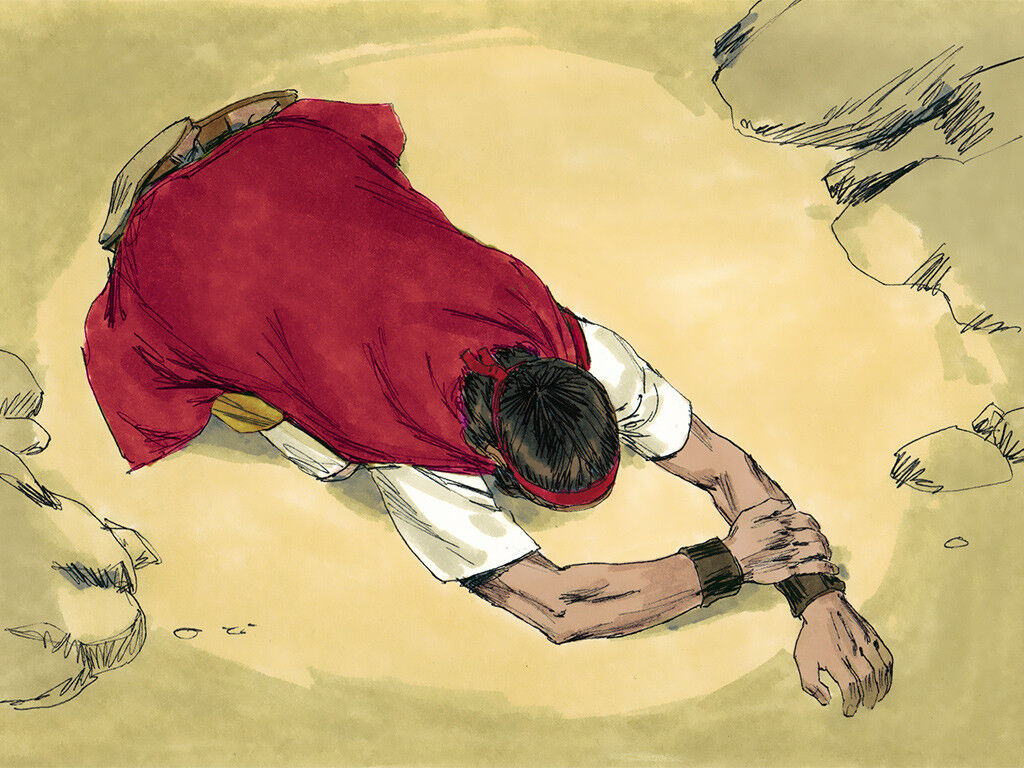


 ~Dave Parks