Over the course of the past year, I have been engaged in some courses offered through Biblearc.com, developed under the auspices of Bethlehem College and Seminary.
Biblearc is a web-based source for Bible study tools and instruction designed to instruct and train students of the Scriptures to read, study, interpret, apply, and present the Word of God.
Various ‘modes’ or tools are imbedded in the program and employed by the instructors to guide the students to understand, teach, and apply the Scriptures as we seek especially and most of all to seek and savor Christ in His Word.
Most of the courses are ten lessons, self-directed, and can be taken lesson by lesson at the discretion and availability of the student. Others are ‘live’ and are followed on a schedule that is set at the times they are presented. All of the lessons are guided and critiqued by Pastors who offer their personal instruction and encouragement every step of the way.
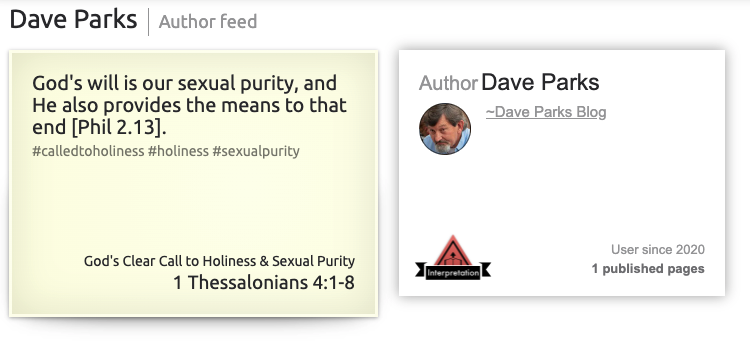
I have completed the second of these courses – this one is their course on PARAPHRASE. The last lesson assignment was to post a Published Page on their website from a passage in 1 Thessalonians, the Scripture we used throughout the course to practice and apply the Bible study methods and tools we were learning to use.
I chose 1 Thessalonians 4.1-8 as my assignment passage: God’s Clear Call to Holiness and Sexual Purity. Here is a link to that assignment. The page is interactive – that is, if you open the page, you can not only see the modes in which I wrote my paraphrase of the selected text, but you can also open the ‘dot notes’ in which I wrote observations, cross-references, and truths that are taught in that particular verse or word.
Here are the Lesson Notes/talking Points for the studies we have conducted in our Sunday School class from Colossians. There are five sets of Lesson Notes in this one composite paper. I have kept the Scripture text passages and lesson titles that were in our Lifeway Explore the Bible personal study guides to aid our class members to keep in sync with their scheduled study guides. However, the Lesson Notes are from my own personal study and presentation. Also, these Lesson Notes are not intended to be structured outlines or detailed commentary. Rather, they are as we call them: Talking Points. They are topics, subjects, truths, applications, and takeaways that we intend to discuss, learn, and practice in our lives from our study of the Scripture texts.
The themes we emphasized throughout our study of Colossians are the same themes that Paul was presenting and pressing on them: CHRIST’S SOVEREIGNTY, SUPREMACY, AND SUFFICIENCY.
I offer them now to you with my prayer and my hope that God will be pleased to use them for your edification and “that in everything He might be preeminent” / Colossians 1.18.
You will find here the Lesson Notes for the 6-part study we conducted in our Sunday School class on the book of Ruth.
As the course title states, this is not intended to be a detailed study of this precious and prescient short story. Volumes have been written about the events that transpired in this story, explanations of the Scriptural, historical, and cultural practices that are acted out in this story, and the prophetic significances of the redemptive pre-enactments that the characters lived out in their actions – all of which were sovereignly superintended by God’s redemptive purpose and plan and pointed to Jesus Christ and His Gospel.
I am not capable, nor was it my purpose, to reproduce those studies. Think of these Lesson Study Notes more as “talking points” to guide us through the reading and discussion of these lessons. All of these “talking points” opened up much more explanation and discussion of the exciting truths that are written here in this Romance of Redemption.
As I have reminded our class repeatedly, these lessons are not intended to be structured lessons or studies. Rather they are prepared and presented to help us all better learn how to read our Bibles on a daily basis and search for and find Jesus Christ there. After all, the Bible is “God’s Story about His Son, Jesus Christ, to us” and Jesus Himself declared that they ALL testify to Him [see John 5.37-40 & Luke 24.25-27, 44-48].
So what we want to do is better learn how we should read, study, understand, and most of all, worship Jesus Christ as He is promised, prophesied, and pre-enacted in the Old Testament Scriptures.
I use the word “pre-enactment” a lot in our Sunday School lessons especially when we are studying from the Old Testament Scriptures because that is what the whole OT is: it is a pre-enactment of the Redeemer God would send us “when the fullness of time had come”[see 1 Peter 1.10-12 & Galatians 4.4]. This Book of Ruth is rich and replete with such pre-enactments.
So I’m making them available to you with the prayer and hope that as we read the Word of God together, we’ll hear the echoes and invitation of Philip’s question to the Ethiopian eunuch, “Do you understand what you are reading?” When the Ethiopian answered, “How can I, unless someone guides me?” … “Then Philip opened his mouth, and beginning with this Scripture he told him the Good News about Jesus” [see Acts 8.26-35].
I did use three resources in particular to enrich my own understanding and help me prepare to present these lessons to our class. Each of them was extremely helpful to me in distinctive ways:
the BEREA BAPTIST CHURCH at HIDDENITE, NORTH CAROLINA
which had full and sufficient opportunity for judging his gifts,
and after satisfactory examination by us in regard to his Christian experience,
call to the ministry, and views of Bible doctrine,
DAVID STEPHEN PARKS
was solemnly and publicly set apart and ordained to the work of
THE GOSPEL MINISTRY
by the authority and order of
the HILLCREST BAPTIST CHURCH at Winston-Salem, North Carolina
on the Twenty-seventh day of August, 1973.
(signed) E. W. Parks, Pastor
ORDAINING COUNCIL
E. W. Parks, Pastor of Ordaining Church
Harry J. Simms, Moderator of Ordaining Council
L. Leroy Pack, Clerk of Ordaining Council
Herbert H. Wilson
Thomas D. Flynn
Roger Lackey
H. Rondell Rumburg
Charles C. Vogler
Brant H. Seacrest
T. B. Freeman (who preached the Pastoral Charge)
Donald S. Fortner
I. (Irvin) L. Wallace
B. (Bill) E. James, Jr.
[Note: of these 13 pastors who comprised this Ordaining Council, 10 are now with the Lord]
27 August 1973 – One of the most solemn, significant, and memorable days of my life.
A host of the members and friends from Berea Baptist Church had driven the 50 or so miles to attend and participate in this service. They had called me to be their pastor a little over a month before, 4 July 1973, and had requested my ordination by my home church, Hillcrest Baptist Church. I was only 22 years old, and this was my first pastorate. They were and are a most gracious people, though most of them who were in attendance that night are also with our Lord. Those who are still living remain among my sweetest and dearest friends.
The service lasted over two hours. We convened that Monday evening around 7 pm as best I can remember.
Harry J. Simms was the Moderator of the Ordaining Council. He was a most influential man to all of us in our family. “Preacher” Simms was my immediate predecessor-pastor at Berea church. He was the one who had introduced me to them by inviting me on a number of occasions to preach in his absence. [I also have vivid memories of the first message I preached at Berea. It was from Psalm 11.1-7, God’s Immovable Foundations. That was 6.6.71. I’ll tell that story another day…] Preacher Simms was also my Dad’s primary mentor and friend from the beginning of his ministry. Shortly after the Lord saved my Dad, he became acquainted with Preacher Simms. They began to talk and study the Scriptures together regularly. Preacher Simms discipled Dad and taught him the doctrines of the Word of God. As a consequence, Dad confessed and identified with Baptist teachings. When Dad started conducting Sunday afternoon services in a small church building on Goldfloss Street [this was in Winston-Salem NC] that had been vacated when the former church relocated, he invited Preacher Simms over to preach in those services. After a few months, Preacher Simms told Dad that he needed to start preaching in his own services. He led in my Dad’s ordination also. That was around 1949 – 24 years before this time of my own ordination.
For my ordination service that night, they had set up a small table on the pulpit platform of Hillcrest Baptist Church. [This was in the small auditorium in the original building…it is now their fellowship hall.] It was barely big enough for the two of us – Preacher Simms and me – to sit around. Our faces were probably not three feet apart. Keep in mind that this was August 1973. The Nixon-era Watergate hearings had been televised for several weeks back during May-June. So as we took our places around this little table for my interrogation and examination, Preacher Simms looked at me and quipped, “Kind of feels like Watergate, doesn’t it?” But he also assured me that the purpose and spirit would be more kind than those hearings were. So for the next 1 ½ hours, he and the other members of the ordination council asked me questions about my salvation testimony, my call to preach the Gospel, my doctrinal beliefs, how I intended to shepherd and lead the flock of God, and my commitment to be faithful to Jesus Christ and the Word of God. It was a detailed and thorough examination.
T. B. Freeman delivered the Pastoral Charge. Brother Freeman also had been associated with our family and a part of my life for as far back as I could remember. He was originally from Bristol TN but had re-settled in Mims/Titusville FL where he also pastored. Brother Freeman was an evangelist and revivalist. He travelled extensively among churches in many states preaching revival and protracted meetings. He was a godly, humble, Spirit-filled man of God. More than anything else, T. B. Freeman was a man of fervent and passionate prayer. My Dad had invited him on numerous occasions to come to the churches he was pastoring and preach revival meetings. He was like another father-figure to me. I respected and admired him immensely. So I asked that he be invited to come and preach my Pastoral Charge to me. He would later invite me to come to the churches he pastored and preach in revival meetings.
And then, of course, my Dad. Dad had been my Father, my Pastor, and my primary teacher, trainer, and role model from the beginning of my life. Even before the Lord saved me and called me by His Grace to preach His Gospel, I still had always wanted to be a preacher … because Dad was a preacher, and I wanted to be like him. Dad delivered the final charge to me to be faithful to Christ and to give myself and my life totally to serve Him. My Dad had modeled that charge for me to emulate and imitate. He then presented me with my ordination Bible [which, of course, I still have right here…].
The other ten preachers on the ordination council were either preachers in the Hillcrest church or pastors of other churches with whom we fellowshipped. Looking back over those names, I had preached at some time or another in all of their churches. All of them were brothers in ministry who had encouraged and helped develop me, and I was blessed by God to have been influenced by them in so many ways.
I think back on that night and that service very often. That occasion – the purpose of it and the commitments I made – still grips me and convicts me. I hope and pray to God that I have been faithful to the stewardship that has been entrusted to me, and I want to continue to be faithful to Christ who called and appointed me to this ministry until my appointed end – and I stand before Him to give account.
It’s coming back to me again in power on this anniversary day.
And with whatever remaining life and time of service God may be pleased to grant me, I still commit to this charge:
“But I do not account my life of any value nor as precious to myself, if only I may finish my course and the ministry that I received from the Lord Jesus, to testify to the Gospel of the Grace of God” ~Acts 20.24
to show that the surpassing power belongs to God and not to us.” ~2 Corinthians 4.7
Here is our Pastor Hershael York’s message from 2 Corinthians 4.7-18, The Paradox of the Christian Life.
All of his messages are delivered to us from the Word of God with clarity, conviction, integrity, and passion – “in demonstration of the Spirit and of power” (1 Corinthians 2.1-5). They are all challenging, convicting, and confirming – all at the same time.
But this one is so very personal to me. If ever I have had a ‘life verse’ [as is so common to have] that summarizes and defines my experience as a disciple of Jesus Christ and a minister of the Gospel, it is 2 Corinthians 4.7.
In fact, in a very real sense, it has been my “signature” verse. For all of my life over the past 50 years, I have signed “2 Cor 4.7” along with my name because it so tells my life story.
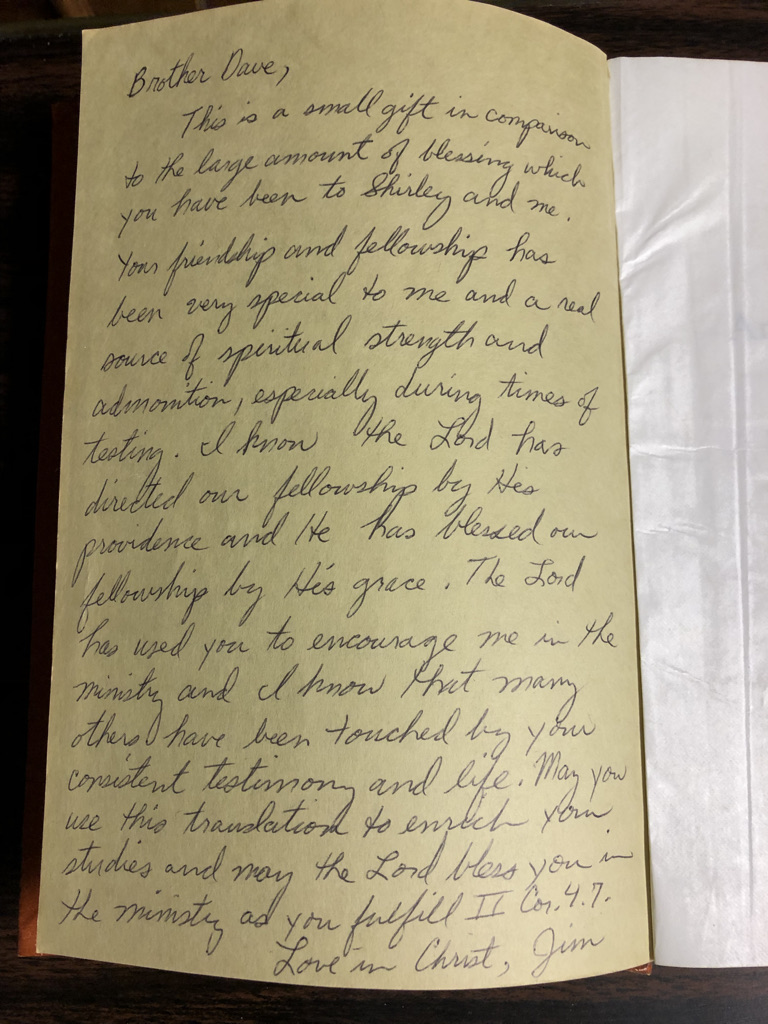
My very best friend from our very first day of Bible College, Jim Park, gave me this NASB back around 1972. “II Cor 4:7” was already imbedded into my experiences and conversations with those closest to me.
God began crushing me 50 years ago to the point that I thought He was taking my future ministry of preaching away from me. I despaired that I had any future in Gospel ministry.
I had never wanted to do anything else. I had never prepared to do anything else.
I was just getting started, and I thought I had already slammed into an impassable dead-end. I had just begun my ascent, and I was already in an irrecoverable tailspin, ingloriously crashing and burning.
In fact, I told my Dad during that season [I was still living at home at the time], “Dad, please don’t ask me to preach again. I can’t do it anymore.”
I was kind of the “rising young star” among the younger generation of preachers in our particular circles and fellowships of churches. I was beginning to receive invitations from pastors we knew to preach in their churches, at their events, fulfill pulpit supply for them, preach in revival meetings, etc.
But all that prospect of future ministry hung precariously in the balance … quivering and ready to tip to the “dread” side. It was like I had just walked out on the stage of ministry, but all of a sudden, the curtains were descending and all the lights were going dark.
And [to run ahead of my story just a bit…] I am convinced of this as much as anything: as I pondered these dark experiences and cried out to God “What are You doing? What is going on with me? What am I supposed to learn from all this?” [as in 2 Corinthians 12.7-9] – it became obvious to me that God was, indeed, taking my ministry from me so He could give it back to me again with the understanding that He is the Potter, I am the clay.
{A personal aside:
as I have evaluated these experiences over the past decades, I have come to the conclusion – at least for me – that God will not give me a signal gift, blessing, or privilege to enjoy and exercise for His Glory without somehow, somewhere along the way taking it from me and then giving it back under the terms of His gracious Lordship (2 Timothy 2.20-21; 1 Peter 4.10-11). I have no idea how He is pleased to deal with you or any of the others of His faithful servants. I have no empirical or anecdotal witnesses to cite. I just know that any time I have ever referred to Abraham’s test in Genesis 22, or Jacob’s in Genesis 32, or Paul’s in 2 Corinthians 12, I have at least alluded to this personal principal in my own ministry. “For He knows our frame; He remembers that we are dust” (Psalm 103.14), and He can blow or kick our dust at His pleasure when we need to be reminded that our dust is His making and He has framed us for His Glory – not to seek great things for ourselves (Jeremiah 45.5)…}
He had begun to pound me, break me, crush me so He could re-make me to be “a vessel for honorable use, set apart as holy, useful to the Master of the house, ready for every good work” (2 Timothy 2.21).
He was willing to allow me the privilege to serve Him, but I must surrender to His terms. He was making me willing in the day of His power.
I vividly remember the crisis watershed occasion and the specific message I was preaching when this crisis experience took place. I’m looking at the notes to that message right now. [Yes, I still have pretty much every sermon outline and message notes I have ever used.] It is dated 4.11.71.
I was just barely 20 years old.
That Sunday morning was Easter Sunday morning 1971. I had prepared the message from 2 Corinthians 5.14-21, “Life with the Living Lord.”
But from that Sunday morning, God began to crush me with what I can only best describe as a total ‘nervous breakdown / emotional, psychological meltdown’ to the point that I was terrified at the prospect of standing in front of people to speak – what could be called ‘stage fright,’ I guess.
I suffered panic attacks, high anxiety, hyperventilation to the point of having sudden rushes of adrenalin, becoming mentally disoriented, feeling almost detached from myself and ‘out of body,’ sweaty, and breathless. It was more than just mere nervousness or jitters. It was total, abject, paralyzing, debilitating fear … terror. And it was all triggered by the very thought of standing before others to speak.
I still continued to preach as I received invitations [and I was receiving more and more invitations to preach at this time], but I lived in this paralyzing terror that I wouldn’t be able to speak when I got up and opened my mouth to do so. That I would get up to speak, but that when I opened my mouth, my voice wouldn’t come out.
I even got to the point that I would prepare my preaching notes, but I wouldn’t put the date on it, because I didn’t know whether I would be able to speak to deliver it. I would insert the date after I had, in fact, delivered the message.
What was even more distressing and disconcerting about this whole experience is that I had no idea what was happening to me. At that time of my life, I had never heard of ‘panic/anxiety attack.’ As far as I was concerned, this had never happened to anyone else before, and I was the only one who had ever experienced this kind of breakdown.
I told no one. I honestly thought that no one would understand what I was experiencing – that they wouldn’t know what I was trying to describe. Also I was afraid to even acknowledge that this sort of thing was happening to me at all. I couldn’t deny it was happening, but I thought that if I didn’t acknowledge it, it might just go away, or at least I would be able to manage and survive it. I was also afraid that if I acknowledged it, that it would spiral totally out of control and completely, totally consume me.
And I didn’t tell anyone about these experiences for probably 25-30 years afterwards. When I did relate some of these experiences, it was only to individual persons who were struggling with the same anxiety for the purpose of helping them, encouraging them, and giving them hope.
I have never been as publicly transparent and open with this testimony as I am now.
These seasons of suffering this kind of fear, high anxiety, and panic attacks would go on for months on end at a time. They would be accompanied by bouts of deep depression, mainly just from the mental and emotional stress of constantly dreading and being in terror at the prospects of preaching again [which I still was], and also from the possibilities that my future ministry was being taken from me.
I couldn’t see any prospects that it would ever be any different than this. And I couldn’t bear the thought that maybe I was going to suffer this fear and anxiety for the rest of my life. I didn’t want to entertain the prospects of that future. I didn’t even want to live with that kind of future.
I am thankful to God that He began to teach me what He purposed for me to learn from these experiences. It was at that time, very early on in these experiences, that God led me to 2 Corinthians, and especially to chapter 4, verse 7. As I learned it in the Authorized Version,
“But we have this treasure in earthen vessels, that the excellency of the power may be of God, and not of us.”
I had no doubt from the very beginning that God was dealing with my pride. My pride, self-confidence, and all seeking of any recognition, glory, and praise for myself must be crushed. And crushed, it was. It has to be if I am going to be God’s preacher. And I did want to be God’s preacher.
The ‘excellency of the power’ or ‘the surpassing power’ belongs to God and is given and ministered through us by God in the moment when it is used. The ‘treasure’ that God has entrusted to us is His Son and His Gospel – what Paul describes in chapter 3, verse 18 as “the glory of Christ,” and later in chapter 5 as the ministry and message of reconciliation (2 Corinthians 5.11-21).
God entrusts this glorious Treasure to us, as clay jars, so that when His power is ministered to others through us, we will know that it is Him and His power – and not from us. We need to know, and we will have to learn, that as ‘jars of clay,’ we are weak, fragile, brittle, and broken. If we don’t know that sufficiently, then God will proceed to break and crush us until we do.
But when He does crush us, then we learn to cast ourselves helplessly and hopefully upon Him to work and minister the Glory of Christ through us to others. God continuously works death in our fleshly bodies through our afflictions so that He can clear the channels so His Life can flow through us to others.
So, going back to 1971… This initial season of crushing didn’t last forever. It did go on for a long time from then – maybe as long as two years. But God was teaching me to commit my ministry to Him for His use, His Glory, His pleasure. And He would supply the strength I needed to fulfill His calling and assignment.
2 Corinthians 4.7 was becoming my life’s and ministry’s “user guide.” It was the protocols by which I learned to function. It became my very signature.
In the ensuing years, there have been seasons when it would return. The fear, the anxiety, the panic, the depression – sometimes it would come back on me. I have cycled in and out of it for seasons at a time. But there is something loving that is going on even in those times. It is a Hebrews 12 kind of season. My Heavenly Father is exercising His loving discipline to train me more completely, develop me more fully, and share His Holiness with me. And as He promises, “For the moment all discipline seems painful rather than pleasant, but later it yields the peaceful fruit of righteousness to those who have been trained by it” (Hebrews 12.11).
There is an inexplicable and unique kind of intimacy with the Father that grows and is cultivated to ‘the peaceable fruit of righteousness’ during those seasons. And maybe, just maybe, it can’t be experienced and enjoyed apart from them.
It is like my Father has to touch me every now and then with His heavy finger of love to remind me, “Son, remember, it’s not about you – it’s about the Glory of Christ. You belong to Me. You are My chosen vessel, and I will be pleased to use you; but I will use you My way. You’re not sufficient for any of this – but My Grace is always sufficient for you, for My power is made perfect in your weakness.”
To which I can only reply: “For the sake of Christ, then, I am content with weaknesses … For when I am weak, then I am strong” (2 Corinthians 12.7-10).
In that same message from Pastor York that I referenced at the head of this testimony, he quoted from Amy Carmichael a poem I had never heard before. I instantly identified with it and related to it.
Hast Thou No Scar | by Amy Carmichael
Hast thou no scar? No hidden scar on foot, or side, or hand? I hear thee sung as mighty in the land, I hear them hail thy bright ascendant star, Hast thou no scar?
Hast thou no wound? Yet, I was wounded by the archers, spent. Leaned me against the tree to die, and rent By ravening beasts that compassed me, I swooned: Hast thou no wound?
No wound? No scar? Yet as the Master shall the servant be, And pierced are the feet that follow Me; But thine are whole. Can he have followed far Who has no wound nor scar?
Yes, I do. I have some wounds, some scars. They are the cracks and brokennesses in my jar of clay so the Glory of Jesus can shine through me – “to show that the surpassing power belongs to God and not to us.”
Debbie and I were engaged to be married in the Fall of 1975. (We would be married in June 1976.)
Back in those days, we had to do whatever ‘courting’ we could do over 400 miles.
I was pastoring in Alexander County/Hiddenite NC and she was living in Lexington KY. So, I would travel to Lexington every opportunity I could find (or make up), and she would occasionally come to NC.
I was living in the parsonage of the church I was pastoring, so she would stay with our dear friends, Pastor Jim and Shirley Park. Jim was my very closest friend from Bible College days, and he pastored in nearby Statesville NC, probably 15 miles from Hiddenite.
Jim and Shirley had a young son, Bradley. I guess Bradley was pre-school age. Bradley was excited about Debbie’s coming to visit with me and stay with them for the first time.
So he asked me one day: “What does she look like?” So what do you tell a 4-5 years-old what someone else looks like?
I began to describe the best I could what he could expect to see in her physical features when he first saw her.
That’s when I began to think about what she looks like to me – her virtue, her character, her outer and inner beauties.
I wrote this little song to express just some of my admiration, adoration, and love for all the beauty I saw in her. And my smitten admiration only continues to grow and increase.
Years ago – I mean, like, 50 years ago … before I left home to begin my own pastoring ministry – I was leading the worship in singing and music in the small church my Dad pastored in Winston-Salem NC. We committed as a church that we were going to learn and incorporate into our church’s worship services all the older hymns that were in our hymnal. These were hymns that dated back to the 1700-1800s and were written to extol the nature, character, attributes, and works of God. We called them the “anthem-y hymns” because so many of them were written and sung as anthems and expressions of formal worship.
We loved them and sang them often with great delight and they richly enhanced the expressions of our own worship to God.
One of those beloved hymns is this one: The God of Abraham Praise. Thomas Olivers originally wrote it in 12-13 stanzas. Our hymnal – and most hymnals – will include only 4-5 of his original stanzas.
I have included also after the hymn a couple background/historical links and articles that will give you a little fuller understanding of the history and context of this hymn. There is also a link to the congregational singing of the hymn by Grace Community Church, Sun Valley CA.
So, here for your worship, edification, and enjoyment…
The God of Abraham Praise | ~Thomas Olivers, 1772
1 – The God of Abraham praise, Who reigns enthroned above; Ancient of everlasting days, And God of Love; Jehovah, great I AM! By earth and Heav’n confessed; I bow and bless the sacred name Forever blessed.
2 – The God of Abraham praise, At whose supreme command From earth I rise—and seek the joys At His right hand; I all on earth forsake, Its wisdom, fame, and power; And Him my only portion make, My shield and tower.
3 – The God of Abraham praise, Whose all sufficient grace Shall guide me all my happy days, In all my ways. He calls a worm His friend, He calls Himself my God! And He shall save me to the end, Thro’ Jesus’ blood.
4 – He by Himself has sworn; I on His oath depend, I shall, on eagle wings upborne, To Heav’n ascend. I shall behold His face; I shall His power adore, And sing the wonders of His grace Forevermore.
5 – Tho’ nature’s strength decay, And earth and hell withstand, To Canaan’s bounds I urge my way, At His command. The watery deep I pass, With Jesus in my view; And thro’ the howling wilderness My way pursue.
6 – The goodly land I see, With peace and plenty blessed; A land of sacred liberty, And endless rest. There milk and honey flow, And oil and wine abound, And trees of life forever grow With mercy crowned.
7 – There dwells the Lord our king, The Lord our righteousness, Triumphant o’er the world and sin The Prince of peace; On Sion’s sacred height His kingdom still maintains, And glorious with His saints in light Forever reigns.
8 – He keeps His own secure, He guards them by His side, Arrays in garments, white and pure, His spotless bride: With streams of sacred bliss, With groves of living joys— With all the fruits of paradise He still supplies.
9 – Before the great Three-One They all exulting stand; And tell the wonders He hath done, Through all their land: The listening spheres attend, And swell the growing fame; And sing, in songs which never end, The wondrous name.
10 – The God who reigns on high The great archangels sing, And Holy, holy, holy! cry, Almighty King! Who was, and is, the same, And evermore shall be: Jehovah—Father—great I AM, We worship Thee!
11 – Before the Savior’s face The ransomed nations bow; O’erwhelmed at His almighty grace, Forever new: He shows His prints of love— They kindle to a flame! And sound thro’ all the worlds above The slaughtered Lamb.
12 – The whole triumphant host Give thanks to God on high; Hail, Father, Son, and Holy Ghost, They ever cry. Hail, Abraham’s God, and mine! (I join the heav’nly lays) All might and majesty are Thine, And endless praise.
Olivers worked with John Wesley during the time that “The God of Abraham Praise” was written. During the time, he often met with members of London’s Jewish community. In 1772, Olivers was attending The Great Synagogue in London and heard CantorMyer Lyon sing “Yigdal” in Hebrew during a service. Olivers then paraphrased and translated “Yigdal” into English and gave the hymn more of a Christian focus.[5] He then asked Lyon if he could use the Jewish melody for the new hymn. Lyon gave him the music and Olivers named this hymn tune “Leoni” after Lyon.[5] When he showed the new hymn to a friend, he annotated each line with scriptural references from The Bible.[4]
“The God of Abraham Praise” was first published as a leaflet titled “A Hymn to the God of Abraham” in 1772. It was later published nationwide by Wesley in the Methodist hymnal “Sacred Harmony”. The hymn later made it to the United States after being published in Joshua Leavitt‘s “The Christian Lyre”.[5] The hymn was composed by Olivers with thirteen verses however later reprints of the hymn omit a number of them[4] with the majority of hymn books using four verses.[5]
He was orphaned at age 4. After getting bounced from relative to relative for years, he was eventually apprenticed to a shoemaker. The shoemaker was a god-fearing man, but this young apprentice, he would have none of it. And eventually this young man lost his way.
As the decade of the 1740’s was coming to a close, he heard the great evangelist, George Whitefield, preach a sermon on Zechariah 3:2, “Is not this a brand, plucked from a fire?” And having heard that sermon, Thomas Olivers became a new creation. This orphan was now a child of God.
In a few years, Thomas Olivers teamed up with the brothers Wesley. And he had quite a ministry of his own. And while not nearly to the extent of John and Charles Wesley, Thomas Olivers also wrote hymns. While in London in 1770, Thomas Olivers went to hear a renown Jewish cantor by the name of Myer Lyon, at the Great Synagogue in London. This is a building that would later be destroyed by the Blitz in World War II. Myer Lyon also doubled as an opera singer under the name, Max Leoni. Olivers had likely heard Leoni sing opera at the Covent Garden Theatre, and now he wanted to hear him sing sacred music in the Synagogue.
That night, Lyon sang the Yigdal, a song dating back to the 1400’s. It prayerfully speaks of the majesty of God. So moved by the song, Olivers waited after the service to meet with Lyon. In the ensuing days Oliver said about transforming this Jewish prayer in Hebrew into a Christian hymn in English. He worked with Lyon on the tune. The collaboration resulted in a 12 stanza hymn we know as, “The God of Abraham Praise.” Olivers credited the tune to Lyon, entitling it “Leoni.” The first stanza rings out:
The God of Abraham praise, who reigns enthroned above;
Ancient of Everlasting Days, and God of Love;
Jehovah, great I AM! by earth and heaven confessed;
I bow and bless the sacred name forever blessed.
As the stanzas unfold, The God of Abraham Praise reminds us that God is a Trinitarian God. Part of the conversion of this piece from a Jewish liturgical prayer to a Christian hymn involved adding stanzas on Christ and the Holy Spirit. Indeed, the words of the ancient doxology remind us that when we say, “Praise God,” we are saying, “Praise Father, Son, and Holy Ghost.”
This hymn by Thomas Olivers has another level of richness to it, and this richness lies in helping us think of something else. Now Abraham first appeared on the biblical scene in the closing words of Genesis 11. He then dominates the next several chapters until his death comes in Genesis 25. Now we do have the rest of the Bible to see God at work in the lives of His people, and at work in His world, and revealing to us His character.
But stop, and consider though what we learn about God from the span of Genesis 12-25.
We learn that God is the God most high—El Elyon in Hebrew. We learn that He is God Almighty—El Shaddai. We learn that He is Jehovah Jireh—the Lord who provides, told for us in that story in Genesis 22, and Abraham and Isaac. We learn that He is a promise making, covenant-keeping God. We learn that He will bring judgment on sinners, but we also learn that He is merciful and compassionate. And in the episode with Hagar in the desert we learn that God is the God who sees, and He is the God who hears. The God of Abraham praise.
As we think of these chapters, we find reason upon reason to praise God—Abraham’s God, and ours.
Today marks an anniversary of one of the most dramatic transitions Debbie and I have made in our years of serving the Lord and ministry together. In 2017, 28 May was on a Lord’s Day, and on that day, I resigned the then-pastorate where we had ministered for the previous 35 years.
I resigned without our having made plans for the transition or knowing where our next place of service would be or what our roles would be when we got there. But we believed that Jesus already knew all that … and we would just follow Him.
But we immediately covenanted together and made two commitments before God:
1 – The first commitment we made is that we would continue following and serving the Lord with our lives and gifts in whatever opportunities and ways He would choose and open up for us.John 12.24-26 had become our call, cue, and prompt.
24 Truly I tell you, unless a grain of wheat falls to the ground and dies, it remains by itself. But if it dies, it produces much fruit. 25 The one who loves his life will lose it, and the one who hates his life in this world will keep it for eternal life. 26 If anyone serves me, he must follow me. Where I am, there my servant also will be. If anyone serves me, the Father will honor him.
Our lives, places of service, and ministry assignments have always been “His call” – not only His call and claim on our lives, but His call as to where we go and what we do when we get there – in other words, our ministry assignment [see John 21.15-22].
2 – And, the second commitment we made is that our continuing service would be in the context and community of a local church. God saves us and calls us to serve Him in the local church. Disciples of Jesus follow Him in the local-church company of other fellow-disciples. We were going to commit to and serve the Lord in the fellowship of His body, the local church … we just didn’t know where and which one…
We hadn’t planned ahead for this transition. But God had. Literally, within the next week, I received an invitation to have some conversations that led us to where we are now – and where we have been since our transition.
We have learned a new song [to us] over the years worshipping and serving in our church, Buck Run Baptist Church: “All My Ways Are Known To You.” We have come to love this song and its message because it is a re-affirmation and blessed re-assurance that we are never lost, mis-placed, or out of the way when we are following Christ. We may not ourselves always know where we are, but our Shepherd is never lost, confused, or disoriented.
All our ways are known to Him long before we ever get there and they become known to us.
I know that the message of the song is so universal to our experiences and to the themes and threads of so many Scriptures, but I wonder if it may be inspired by and based on Job’s painful and yet confident testimony:
If I go east, He is not there, and if I go west, I cannot perceive Him. 9 When He is at work to the north, I cannot see Him; when He turns south, I cannot find Him. 10 Yet He knows the way I have taken; when He has tested me, I will emerge as pure gold. 11 My feet have followed in His tracks; I have kept to His way and not turned aside. 12 I have not departed from the commands from His lips; I have treasuredthe words from His mouth more than my daily food.
~Job 23.8-12 CSB
Here are the words of the song that so thrills us every time we sing it:
In days of peace and days of rest, In times of loss and loneliness; Though rich or poor, Your word is true, That all my ways are known to You
No trial has come beyond Your hand, No step I walk beyond Your plan; The path is dark outside my view, Still all my ways are known to You
And oh! what peace that I have found, Wherever I may be – For all my ways are known to You! Hallelujah, they are known to You!
I do not fear the final night, For death will be the door to life; You take my hand and lead me through, For all my ways are known to You.
And oh! what peace that I have found, Wherever I may be; For all my ways are known to You! Hallelujah, they are known to You!
Open up my eyes so I may see That You have made these ways for me! Open up my eyes so I may see That You my God, will walk with me!
And oh! what peace that I have found, Wherever I may be; For all my ways are known to You! Hallelujah, they are known to You! Hallelujah, they are known to You!
I pray that you will seek and know this same peace and assurance – that ALL your ways are already known to God!
John is describing here a personal encounter with God Himself in this physical world of human experience, and knowing that it was God Himself he had that encounter with because of the evidences of His God-ness.
John uses the word “glory” – “and we have seen His Glory.”
Isn’t this what all religion is seeking and grasping for?
Isn’t this what the human soul longs for?
Isn’t this what our blinded hearts are desperately groping in the darkness to find?
Don’t you wish you could share that same experience of a fresh personal encounter with God in His Glory?
Well, here it is! Here HE is! God – the eternal Word – became flesh and dwelt (ἐσκήνωσεν / pitched His tent, tabernacle) among us! The eternal, ineffable, unapproachable God in-fleshed Himself in our human form and came to live among us!
In the muted veil of His flesh [Hebrews 10.19-20], we SAW the Glory of God who otherwise cannot be visibly viewed. John explains the mystery of the incarnation of God in the Person of Jesus Christ just four verses later:
“No one has ever seen God; the only God, who is at the Father’s side, He has made Him known” [John 1.18].
No one has ever seen God – except that we have! In Jesus Christ!
John sums up the human experiences and interactions of the apostles with Jesus Christ as “we have seen His Glory…” He draws out this real, personal, physical “seeing” God in 1 John 1.1-3:
That which was from the beginning, which we have heard, which we have seen with our eyes, which we looked upon and have touched with our hands, concerning the Word of Life— 2the Life was made manifest, and we have seen it, and testify to it and proclaim to you the eternal Life, which was with the Father and was made manifest to us— 3that which we have seen and heard we proclaim also to you, so that you too may have fellowship with us; and indeed our fellowship is with the Father and with his Son Jesus Christ.
This is a parallel statement with what this same John wrote in the Gospel of John 1.1-18. Here in 1 John 1.1-3, he is just expanding on the physical human experiences of personally interacting with God and knowing it is God you are interacting with!
But, the point is that what John exclaims that they physically and visibly saw was “His Glory,” meaning the very Glory of the very God. When they saw His Glory, they saw GOD!
What is this “His Glory” that they saw in the in-fleshed Jesus Christ?
1. We know, first, that this is a clear, unambiguous, confession of the Deity, the God-ness of Jesus Christ. What they saw in Jesus Christ was the exclusive Personal Glory of the Presence of God.God Himself is The Glory.
God is not only glorious as a descriptive adjective; He is The Glory, the essence of the noun. God not only ‘has’ glory, God Himself IS Glory.
Do you remember how that when God was threatening to distance Himself from Israel because of their sin over the golden calf, Moses was pleading with Yahweh not to leave them? God said he would not. Moses wanted a confirmation that God was there. He made this astounding request to the Voice that was speaking to him:
“Moses said, ‘Please show me your Glory!’” ~Exodus 33.18
Yahweh did indeed show Moses His Glory. What He showed Moses was Himself!
And He said, “I will make all my goodness pass before you and I will proclaim before you my Name ‘The LORD’” … “But,” He said, “you cannot see my face, for man shall not see me and live.” And the LORD said, “Behold, there is a place by me where you shall stand on the rock, and while my Glory passes by I will put you in a cleft of the rock, and I will cover you with my hand until I have passed by. Then I will take away my hand, and you shall see my back, but my face shall not be seen.” ~Exodus 33.19-23
When Moses saw Yahweh’s Glory, what he was seeing was God Himself! That’s what John is saying when he exclaims, “We have seen His Glory! We have seen GOD!” In fact, the Glory that John declares that they saw is the same Glory that Yahweh told Moses “But you cannot see my face, for man shall not see me and live.” This is the same Glory that John says they saw – and lived!
God has no physical form, but when He reveals and manifests His Presence, He does so in a visible Glory. Glory is brightness and brilliance. Glory is shining-ness. Glory is bursting, blazing, and even consuming light. 1 Timothy 6.16 declares, “who alone has immortality, who dwells in unapproachable light, whom no one has seen or can see.”
And so when John says that ‘we beheld, we have seen His Glory,’ he sees and recognizes that when they saw Jesus Christ, they were beholding the in-fleshed Person of God Himself in all of His splendor and shining excellence. Jesus Christ is the Light who is God [John 1.4, 5, 7, 8, 9].
2. We know also that when John says “we have seen His Glory,” he is alluding back to the Presence of Yahweh with His people in the Old Testament Tabernacle.
God came down to visibly dwell upon and among His people in the Tabernacle. A ‘tabernacle’ is a ‘tent.’ In fact, when John says that The Glory became flesh and ‘dwelt’ among us, he uses the common verb form for the noun ‘tent’ – He ‘tented’ or ‘pitched His tent’ among us.
This is an obvious allusion to the ‘tent of meeting’ that God prescribed and provided for Israel in their wilderness sojourn. They lived in tents [tabernacles], so God would, too. God’s tabernacle was a special one, an exclusive one. He personally gave Moses the plans and schematics for it, and told him to follow the pattern exactly.
Then, when it was done, God Himself came in a visible Glory and dwelt among them in the Holy of Holies. Whatever it looked like, there was a visible shining Glory that dwelt among them in the Holy of Holies.
The Glory of God’s Presence also hovered over the Tabernacle by day in a visible cloud and by night in a visible fire. The Glory was a visible manifestation of the Presence of God. When ancient Israel saw The Glory, they knew that God was with them, that God was claiming them as His people to belong to Him, and that God was giving Himself to belong to them.
In Romans 9.4, Paul reminds the Jews about the special privileges they enjoyed even under the Old Covenant. And among those blessings was “The Glory”:
“They are Israelites, and to them belong the adoption, The Glory, the covenants, the giving of the law, the worship, and the promises…”
“The Glory” that belonged to them was God Himself living and dwelling among them in the visible Glory.
Now, God was coming to in-flesh Himself in our nature and likeness and physically live among us. John and the other apostles saw this – they beheld the Glory of God in the human tent of Jesus Christ.
“And the Word became flesh and dwelt among us [tented among us, God pitched His tent among us in His human body of flesh and blood], and we have seen His Glory, Glory as of the only Son from the Father, full of grace and truth.”
3. When John says “we have seen His Glory,” we know also that John is pointing us to our future eternal Glory-Home with God and this same Jesus Christ.
All of this future Glory that God has reserved for us will be revealed to this same John just a few years later.
In the Book of the Revelation, Jesus showed John the visions of what our future Glory will be with Him in Heaven – the New Creation, the New Heaven and New Earth.
“And I heard a loud voice from the throne saying, ‘Behold, the dwelling place of God is with man. He will dwell with them, and they will be his people, and God Himself will be with them as their God.’” ~Revelation 21.3
What is most significant about this description of Heaven is that John uses the same imagery and even the same words here that he uses in John 1.14. “The dwelling place of God” is “the tent” of God. “He will dwell with them” is the same word “make His tent” or “tabernacle” with them. God Himself will dwell with us in the Glory of His own Personal Presence. God’s Presence is the Glory of Heaven.
Just like God “tented among us” and lived among us in the in-fleshed Person of Jesus Christ, so He will “tent among us” forever in the resurrected body of Glory that Jesus Christ now is [Philippians 3.20-21]!
When the angel told John he would show him the Bride, the wife of the Lamb,
“…he carried me away in the Spirit to a great, high mountain, and showed me the holy city Jerusalem coming down out of heaven from God, having the Glory of God…” ~Revelation 21.9-11
The Glory of that city, and indeed of all Heaven, is the Presence of God.
“And I saw no temple in the city, for its temple is the Lord God, the Almighty and the Lamb. And the city has no need of sun or moon to shine on it, for the Glory of God gives it light, and its lamp is the Lamb” ~Revelation 21.22-23
The same Glory of God and the Lamb that will be the Light of our eternal Heavenly Home is the same eternal Word who in-fleshed Himself to come and live among us through His human birth. John said of their relationship and fellowship “we have seen His Glory, Glory as of the only Son from the Father, full of grace and truth.”
“We shall be like Him, because we shall see Him as He is!”~1 John 3.2
And we, too, shall see Him and His same Glory forever as He lives among us and makes His daily home among us. We will see the spiritual-physical Face of Jesus Christ – we will visibly see His Glory – just as really as John and the apostles saw His Glory during the days of His in-fleshing.
“No longer will there be anything accursed, but the throne of God and of the Lamb will be in it, and His servants will worship Him. They will see His Face, and His Name will be on their foreheads” ~Revelation 22.3-4
“Please, show me your Glory!”
So, here’s where I’m going with this: Can I see this Personal Glory that John said they saw and beheld so freely? Must I wait until the New Jerusalem comes down from God out of Heaven where Jesus will “tent” among us forever?
NO! This same Glory that is:
the Personal Presence of God
the communal dwelling that God had with Israel in the Tabernacle
indeed the same Glory that dwelled and walked and talked with Adam and Eve in the Garden of Eden before their fall into sin
the Personal visitation that God made among men during the days of His flesh
the Personal Presence and Light that will make Heaven, Heaven
… I can see this same Glory if I’m willing to love and seek Him.
The same Glory that John says they saw when “the Word became flesh and lived among us” is the very same Glory that shines from the Word of God when I look into it and the Spirit of God unveils the Glory of Christ!
“And we all, with unveiled face, beholding the Glory of the Lord, are being transformed into the same image from one degree of glory to another. For this comes from the Lord who is the Spirit.” ~2 Corinthians 3.18
And this Glory that we are beholding in the Word of Scripture is the Face of Jesus Christ, whose Glory John said they saw! What we are seeing in Scripture is The Gospel of His Glory that God Himself shines into our hearts by the new birth and by faith.
The Scriptures radiate with
“the Light of the Gospel of the Glory of Christ, who is the image of God … For God, who said ‘Let light shine out of darkness,’ has shone in our hearts to give the Light of the knowledge of the Glory of God in the Face of Jesus Christ!” ~2 Corinthians 4.4-6
So, YES! You, too, can see and experience – and have a fresh personal encounter with – the very same Personal Glory of God in the Face of Jesus Christ as you read The Word, as you receive His Gospel, and as you fix your eyes of love and faith on Him without looking away!
…unless you are looking at something else that you think is more glorious?









 ~Dave Parks